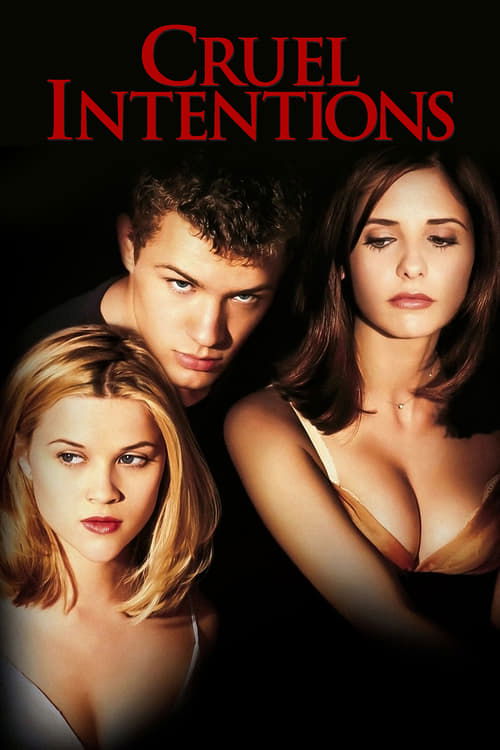
Cruel Intentions
Plot
Slaking a thirst for dangerous games, Kathryn challenges her stepbrother, Sebastian, to deflower their headmaster's daughter before the summer ends. If he succeeds, the prize is the chance to bed Kathryn. But if he loses, Kathryn will claim his most prized possession.
Get the Weekly Woke Watchlist
New and trending movies scored for woke bias, preachy messaging, and forced political themes — before you waste your evening.
No spam. One useful email per week.
Overall Series Review
Categorical Breakdown
The plot focuses on the moral depravity and decadent behavior of the elite class, which is overwhelmingly white. The story’s tension comes from individual moral choices and class privilege, not group identity or intersectional hierarchy. No forced diversity or historical 'race-swapping' is present in the casting.
The film harshly criticizes the hypocrisy and hedonism of the American ultra-wealthy elite, showing their high-society life as fundamentally corrupt and self-serving. This critique is narrowly focused on the moral bankruptcy of one specific class, rather than a broad indictment of the entire Western civilization or core institutions. The story's tragic conclusion suggests that moral chaos ultimately leads to self-destruction.
The primary female villain, Kathryn, is a ruthless and intelligent manipulator who exercises extreme sexual agency and power over both men and women. Her sexual liberation and desire for power are ultimately condemned by the narrative's conclusion. The story’s moral arc punishes the sexually autonomous female and validates the virtuous female character, which runs counter to 'Girl Boss' messaging.
Characters use homosexuality as a tool for leverage and manipulation. The primary male manipulator blackmails a closeted gay student to advance his seduction scheme. The film features a kiss between two female characters as part of a plot of sexual coercion. The narrative contains crude and relentless jokes that degrade homosexuals.
The plot’s two central antagonists embody a philosophy of extreme moral relativism and hedonism. The villain uses Christian symbolism, such as wearing a cross necklace, purely as a tool for social camouflage to project false virtue and manipulate others. The entire story is a sustained demonstration of a world operating on subjective 'power dynamics' rather than a transcendent moral law.
Get the Weekly Woke Watchlist
New and trending movies scored for woke bias, preachy messaging, and forced political themes — before you waste your evening.
No spam. One useful email per week.