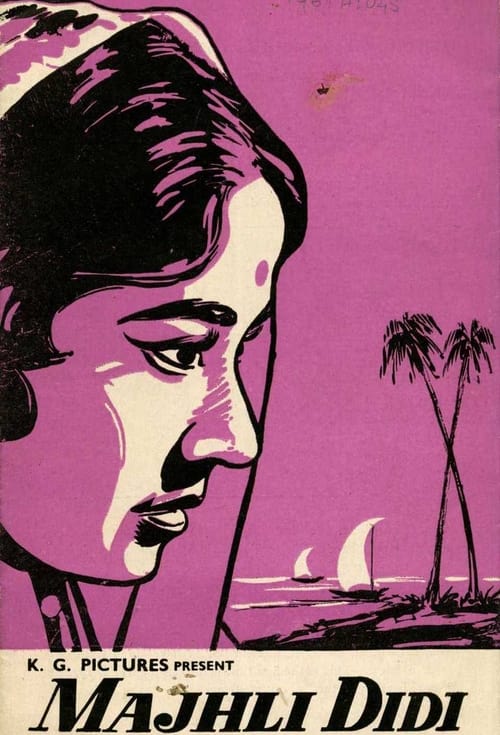
Majhli Didi
Plot
Bipinchandra breaks family tradition by marrying a city girl, Hemangini, much to the chagrin of his sister-in-law, Kadambini, and her husband, Navinchandra. Things are delicate even after both women give birth to two children each. Then Hemangini testifies against Navinchandra in Court, leading to the division of the property. Things got worse by the arrival of Kadambini's orphaned school-going step-brother, Kishan, who is beaten and abused by not only by Kadambini and Navinchandra, but also by their overweight son. When Hemangini objects to Kishan's ill-treatment, Bipin takes the side of the rest of the family, and may probably force her to abandon Kishan to his fate or divorce her.
Get the Weekly Woke Watchlist
New and trending movies scored for woke bias, preachy messaging, and forced political themes — before you waste your evening.
No spam. One useful email per week.
Overall Series Review
Categorical Breakdown
The main conflict is rooted in a universal moral struggle between compassion and cruelty, not an intersectional power hierarchy. Hemangini is judged by the content of her soul and her actions toward an orphan. The division between the characters is based on their individual virtue and vice, not their class or regional background, which serves only as context for the family drama. All main characters share the same broad cultural and ethnic identity.
The narrative critiques the specific greed and cruelty of individual family members, Kadambini and Navinchandra, and the weakness of Bipin. It does not frame the entire Indian village culture or home as fundamentally corrupt. In fact, Hemangini’s compassionate actions and the occasional assistance from poor villagers demonstrate a transcendent virtue that exists within the 'home' culture, preventing any broad civilizational self-hatred.
Hemangini is the moral and competent center of the story. She asserts herself by testifying against her brother-in-law in court and stands up to her husband’s entire family for the sake of the child. Her husband, Bipinchandra, is depicted as weak, spineless, and unable to protect his wife or do the right thing. This dynamic elevates the female protagonist's strength and morality while clearly emasculating the male lead. However, her core motivation is maternal compassion and protection for an orphan, a traditional, life-affirming role, which mitigates the 'Girl Boss' trope.
The story strictly adheres to a normative structure involving traditional male-female pairings and the nuclear family, which is the site of the domestic conflict. The core theme revolves around a property dispute and the adoption of an orphaned child. Sexual identity or alternative sexualities are entirely absent from the narrative, with no deconstruction of the nuclear family being presented.
The movie is a clear moral parable championing a transcendent moral law: the duty of compassion and kindness toward the vulnerable. Hemangini’s goodness is an objective moral truth in the narrative, while the abuse and greed of Kadambini and Navinchandra are clear moral evils. Faith and traditional religion are neither attacked nor central, but the narrative strongly affirms an objective moral truth over moral relativism.
Get the Weekly Woke Watchlist
New and trending movies scored for woke bias, preachy messaging, and forced political themes — before you waste your evening.
No spam. One useful email per week.