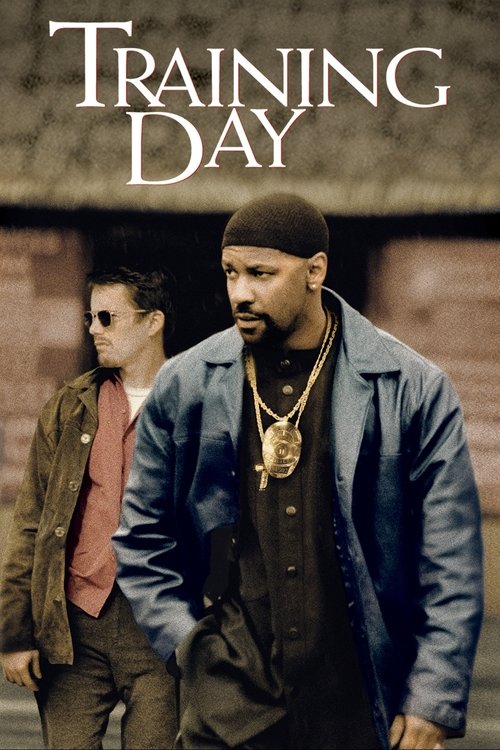
Training Day
Plot
On his first day on the job as a narcotics officer, a rookie cop works with a rogue detective who isn't what he appears.
Get the Weekly Woke Watchlist
New and trending movies scored for woke bias, preachy messaging, and forced political themes — before you waste your evening.
No spam. One useful email per week.
Overall Series Review
Categorical Breakdown
The plot centers on a moral contest between a corrupt Black veteran officer and an idealistic White rookie officer, directly contradicting the vilification of 'whiteness.' Character merit, defined by individual integrity versus personal greed, is the entire focus of the narrative. The film presents the villain as evil due to his moral decay, not his race, which places the characterization firmly in the realm of universal meritocracy.
The film criticizes corruption and a subculture of misconduct within the Los Angeles Police Department, which is a critique of a broken part of a major Western institution. However, the protagonist's mission is explicitly to uphold the true ideals of law and justice, indicating that core institutions are viewed as necessary to shield against chaos. The corruption is framed as a failure of individuals, not a fundamental flaw of Western civilization itself.
The female characters are exclusively in supporting or relational roles, such as the protagonist's wife and the antagonist's mistress. The protagonist's motivation is explicitly linked to providing a better life for his wife and child, celebrating the traditional family unit. There are no 'Girl Boss' or 'Mary Sue' tropes present, and masculinity, when moral (the rookie), is portrayed as protective and vital.
The narrative contains no identifiable elements of queer theory, gender ideology, or a focus on alternative sexualities. The film's environment and dramatic concerns are solely focused on law enforcement, crime, and personal morality. The structure is entirely normative.
The film's central struggle is a clear contest between moral relativism ('the ends justify the means') and objective moral law (the protagonist's unwavering integrity). The story rewards the moral choice and punishes the cynical, subjective 'power dynamics' philosophy of the antagonist, explicitly affirming a transcendent moral order.
Get the Weekly Woke Watchlist
New and trending movies scored for woke bias, preachy messaging, and forced political themes — before you waste your evening.
No spam. One useful email per week.