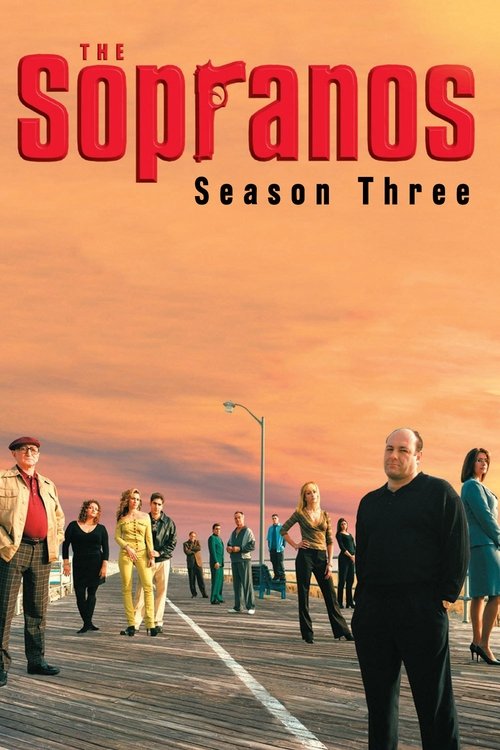
The Sopranos
Season 3 Analysis
Season Overview
In season three, the federal wiretap begins and Meadow goes to college. Tony faces challenges from some tough newcomers, such as hothead Ralph Cifaretto, New York crime boss Johnny Sack and a sexy car saleswoman.
Season Review
Categorical Breakdown
The narrative features a direct critique of the patriarch's racism and privilege when Meadow dates a half-Black, half-Jewish student, Noah. Tony's reaction is vile and his prejudice is clearly framed as a personal flaw. The plot does not exist to lecture on systemic oppression, but it highlights the casual bigotry of the criminal crew and its impact on the younger generation. Character merit is judged primarily by loyalty and competence in the criminal world.
The show is a powerful and unromantic deconstruction of the specific 'home' culture of the organized crime family. Institutions like the family are shown as both the source of strength and the root of corruption, trapping the characters in repeating cycles of trauma. The crime boss character, Tony Soprano, expresses a clear desire for his children to abandon his toxic heritage. This is hostility toward a criminal subculture, not a broad demonization of Western ancestors or civilization.
Gender dynamics focus on the oppression and limitation experienced by women within a toxic, patriarchal social structure. The brutal murder of the stripper Tracee is explicitly used to highlight male misogyny and privilege, particularly the vile nature of the antagonist Ralph. Women like Carmela are portrayed with realistic complexity and struggle, but there are no 'Mary Sue' or 'Girl Boss' tropes. Carmela's devotion to motherhood and the family structure, despite its flaws, is a central, conflict-ridden theme.
The season contains no significant plot points that center on alternative sexualities or that push a deconstruction of gender identity. The focus remains on the dysfunctional but traditional nuclear family structure and the private, extramarital sexual activities of the men. There is no political lecturing on gender theory.
The narrative intensely explores the psychological effects of Catholic guilt and the characters' use of faith to justify criminal behavior. The powerful moral voice of a non-Catholic therapist challenges Carmela to leave her husband immediately, calling her an accomplice and rejecting her reliance on the 'sanctity of the family' narrative. This critiques the *hypocrisy* of the faithful, but the show is also framed by a pervasive sense of moral relativism and the lack of a higher moral law, which is a spiritual vacuum.