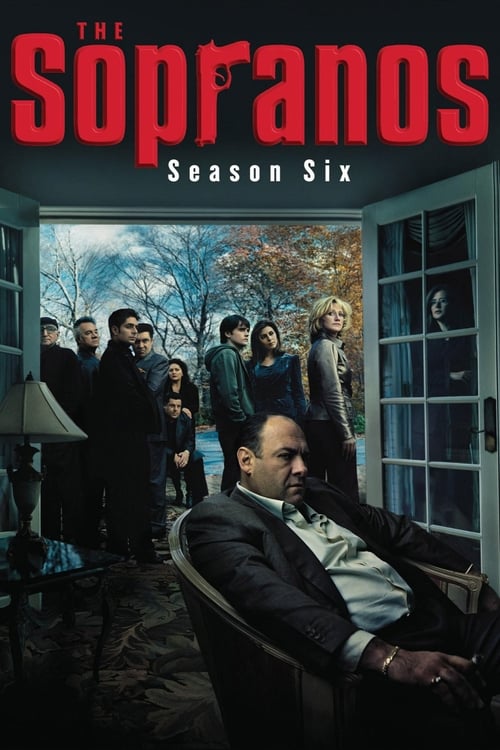
The Sopranos
Season 6 Analysis
Season Overview
As the final episodes take shape, Tony faces a myriad of stress-inducing crises at home, at work, and from the law. While his wife and children each make choices that promise to change the face of the Sopranos' domestic life, Tony also comes to doubt the allegiances of some of those closest to him at work . . . none of whom is above suspicion.
Season Review
Categorical Breakdown
The narrative does not rely on race or immutable characteristics to determine character merit; characters are judged by their actions, which are almost universally immoral. The white male characters are depicted as incompetent or evil, but this is due to their criminal, narcissistic pathology, not a lecture on 'whiteness.' An episode features Meadow Soprano getting involved in a social justice organization, and the storyline highlights the internal politics and disillusionment that clash with her idealism, offering a critique of the movement's radicalization, rather than promoting it as righteous.
The show is fundamentally a critique of the American Mafia subculture and the corrupted institutions of the Soprano family, not a hostility toward Western Civilization or America itself. The characters' Italian-American heritage is constantly deconstructed, showing the hypocrisy of holding onto 'tradition' while engaging in depravity. The critique of family and ancestral heritage is directed at their criminal life, which is framed as destructive, rather than inherently corrupting all Western institutions. The pervading mood is bleakness and existential dread resulting from a life of greed and denial, not an endorsement of foreign cultures as spiritually superior.
Female characters like Carmela are portrayed with complexity, wrestling with the moral dilemma of the patriarchal, criminal system that provides their wealth. They are not 'Girl Boss' archetypes, nor are they flawless; they are deeply flawed and complicit. The male characters are consistently emasculated by their own deep psychological issues and personal failings, not by superior women. Motherhood is shown as a central, but complicated and often compromised, aspect of life for the Soprano women, not simply a 'prison.'
The season features a major storyline involving a prominent mobster, Vito Spatafore, whose homosexuality is discovered. The immediate and brutal reaction from the mob crew, particularly Phil Leotardo, showcases extreme homophobia, which the narrative portrays as a manifestation of the mobsters' own deeply twisted, hypocritical, and fragile sense of masculinity. While a sympathetic alternative life is briefly shown, the character's death ultimately highlights the inescapable cycle of violence and bigotry within the mob subculture, not a mandate to center sexual identity, or a deconstruction of the nuclear family by the narrative.
The core characters are 'cultural Catholics' whose lives are defined by profound moral relativism and hypocritical use of faith. Tony Soprano’s existential dread and agnosticism are key thematic elements. The show is about the moral vacuum that results from the characters’ rejection of objective truth and higher moral law, with their misery being the 'karma' or judgment of their actions. The narrative does not frame traditional religion as the root of evil, but rather the failure of the characters to adhere to any moral code, religious or otherwise.