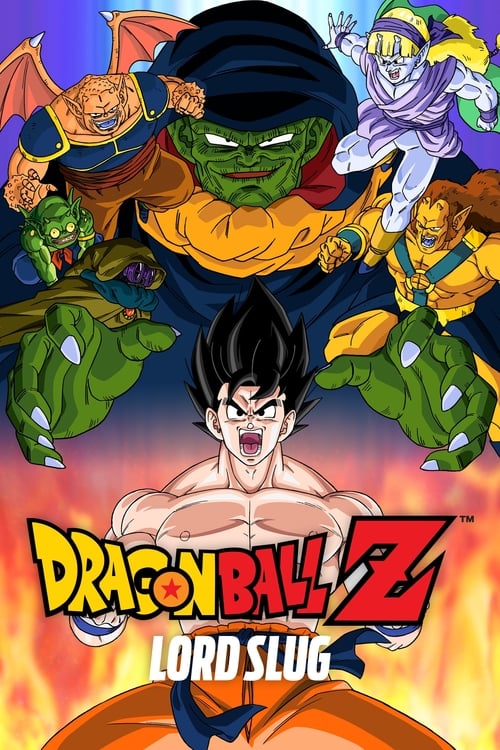
Dragon Ball Z: Lord Slug
Plot
A Super Namekian named Slug comes to invade Earth. But the Z Warriors do their best to stop Slug and his gang.
Get the Weekly Woke Watchlist
New and trending movies scored for woke bias, preachy messaging, and forced political themes — before you waste your evening.
No spam. One useful email per week.
Overall Series Review
Categorical Breakdown
The plot is entirely driven by a conflict between heroes and a planetary conqueror whose motive is ambition and pure evil, not group identity or systemic issues. Characters are defined by their strength, training, and spiritual state, representing universal meritocracy. There is no vilification of any specific demographic or race-swapping; the heroes are a multi-species group united by their shared goal of protecting Earth.
The central conflict is the desperate defense of Earth against an extraterrestrial invasion that seeks to destroy the planet’s atmosphere and conquer its people. The narrative frames the home world and its inhabitants as inherently worthy of protection and sacrifice. There is no element of civilizational self-hatred or demonization of ancestors; gratitude and the necessity of protecting institutions are the driving force.
Male characters are the central powerhouses and fighters in the conflict, representing traditional protective masculinity. Female characters like Bulma and Chi-Chi occupy supportive roles as scientist, mother, and wife, adhering to traditional gender roles for the franchise. There are no 'Girl Boss' tropes, no instant female perfection in combat, and no anti-natal or anti-family messaging is present.
The movie contains zero discussion, representation, or focus on alternative sexualities, gender ideology, or the deconstruction of the nuclear family. The presentation of relationships is entirely normative, focusing on the action plot and the traditional family unit of Goku, Chi-Chi, and Gohan without any explicit or implicit ideological lecturing.
The villain, Lord Slug, is explicitly a 'Super Namekian born with a heart of pure evil' who embraces 'darkness.' The heroes rely on a force of 'pure light' and collective positive energy, the Spirit Bomb (Genki Dama), to defeat him. This establishes a clear, transcendent moral law of objective good versus pure, incarnate evil, resisting moral relativism. The concept of a spiritual hierarchy (King Kai) is treated as a source of strength and guidance.
Get the Weekly Woke Watchlist
New and trending movies scored for woke bias, preachy messaging, and forced political themes — before you waste your evening.
No spam. One useful email per week.