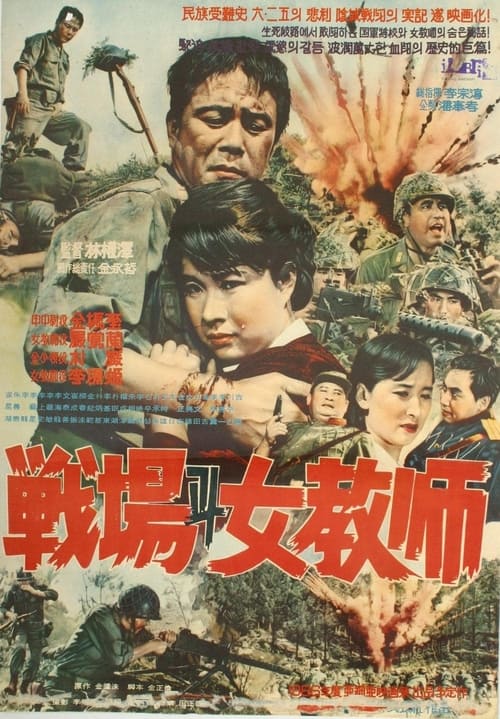
Battlefield and a Female Teacher
Plot
Get the Weekly Woke Watchlist
New and trending movies scored for woke bias, preachy messaging, and forced political themes — before you waste your evening.
No spam. One useful email per week.
Overall Series Review
Categorical Breakdown
The narrative focus is on an ideological and national conflict, the Korean War, not on race or intersectional hierarchy. The struggle is framed as a universal battle against an oppressive force, where character virtue and national loyalty are the key merits. The film does not vilify 'whiteness' or force the insertion of modern, Western-style diversity politics.
The plot centers on the atrocities committed by the invading North Korean forces. This inherently frames the South Korean/Western-aligned culture as the home worth defending, where the external ideology (Communism) is the source of moral corruption and chaos. The film is an expression of civilizational defense, which is the antithesis of self-hatred.
The female teacher is the central protagonist who exhibits immense personal strength and courage in a time of war. Her role is heroic and vital to the plot. However, this is depicted through grit, moral fortitude, and survival in a hostile environment, not through emasculating the surrounding male characters or lecturing against motherhood/family. The low score reflects the prominence of a strong female lead without the 'perfect instant' or anti-natalist tropes.
The core themes are war, survival, and ideological struggle. As a 1966 South Korean war film, there is no presence of alternative sexual ideologies, deconstruction of the nuclear family, or gender theory lecturing. The structure is entirely normative, focusing on traditional roles within a context of national crisis.
The film's focus on the 'atrocities' committed by the communist forces places the conflict in a clear moral framework of good versus evil. This narrative structure strongly suggests an acknowledgement of objective truth and a higher moral law being violated. Traditional religion is not vilified or connected to the conflict's source of evil.
Get the Weekly Woke Watchlist
New and trending movies scored for woke bias, preachy messaging, and forced political themes — before you waste your evening.
No spam. One useful email per week.