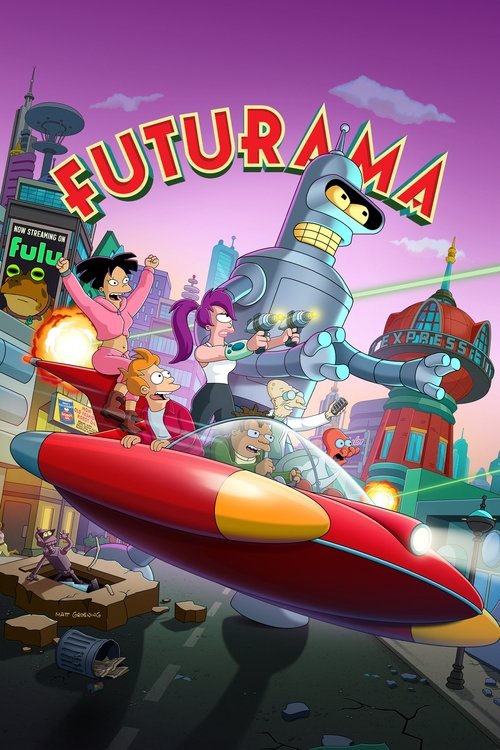
Futurama
Season 10 Analysis
Season Overview
Bender is rampaging out of control! A volcano is about to explode! Fry confronts a rival for Leela's love! And Dr. Zoidberg is rising up to heaven?! The excitement might be too much! You've been warned... it's an all new season of FUTURAMA!
Season Review
Categorical Breakdown
One episode directly addresses the modern concept of cancel culture with Zapp Brannigan as the target. The narrative also includes an arc for Leela, a non-human character, to make peace with her mutant identity, centering a non-normative identity as a key theme. The show uses its established premise of a diverse future to incorporate intersectional issues, but without the biting satire of earlier seasons.
The season contains a climate change episode that is described by commentators as a direct 'lecture.' The narrative explicitly condemns the people and society of the 21st century (Fry's home culture and the show's past) for their inaction on climate data that was 'available in 2025.' This represents a clear indictment and demonization of a past civilization for its moral failures, scoring high on the civilizational self-hatred metric.
Leela, a classic 'Girl Boss' archetype, is portrayed as the dominant and competent female. One episode reportedly breaks up her long-term, established relationship with Fry to generate conflict, which is viewed as manufactured drama that undercuts the stability of the central couple. Fry is a consistently bumbling male figure, maintaining the established dynamic without new, overt emasculation, keeping the score moderate.
The plot summaries do not reveal a central focus on contemporary sexual ideology, deconstruction of the nuclear family as an institution, or explicit gender identity narratives. The show retains its 'robosexual' satire from earlier seasons, but the content of this specific season does not meet the criteria for centering alternative sexualities or propagating gender theory as a primary plot driver.
A major episode focuses on an event that appears to be the Rapture. Professor Farnsworth, representing science and secularism, actively forms a cult to find a scientific explanation for the event, ultimately succeeding in deconstructing and replacing the supernatural explanation with a materialist one. This structure directly frames traditional religion as a false phenomenon that science must defeat, which aligns with the criterion of hostility toward traditional religion.