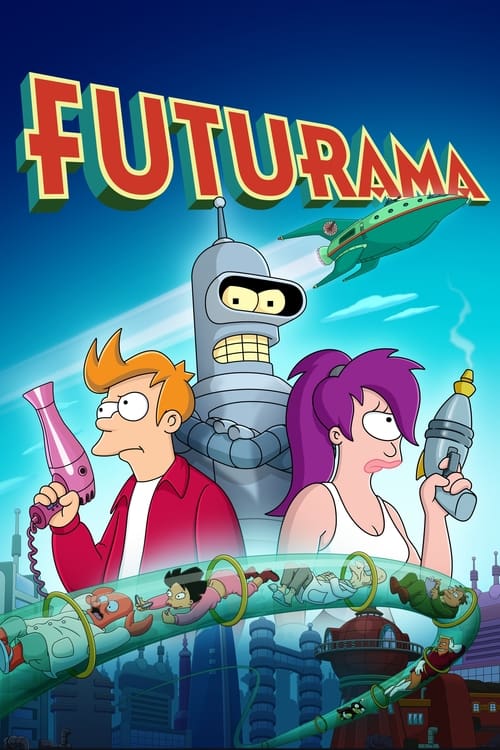
Futurama
Season 8 Analysis
Season Overview
No specific overview for this season.
Season Review
Categorical Breakdown
The season contains an episode dedicated entirely to the mechanisms and fallout of 'cancel culture,' featuring a guest star who is a lightning rod for the topic. Another storyline centers on political division and disinformation around a pandemic, setting the narrative firmly within modern intersectional discourse and the critique of political tribalism. While the satire targets the absurdity of all sides, the reliance on these highly-charged cultural topics makes identity a primary driver of the comedy.
The hostility is aimed at contemporary human institutions, like corporate streaming platforms, cryptocurrency, and 21st-century technology, which is a continuation of the show's decades-long tradition of criticizing all human endeavor. Fry's attachment to the 20th century, which is often shown as superior in its simplicity, provides a counter-balance to the absolute demonization of the past, mitigating the civilizational self-hatred.
The core relationship between Leela and Fry is presented as one of committed, domestic bliss, validating the traditional pairing. A key episode on Amy and Kif's children resolves with Amy being declared the 'true' mother because of her committed care and nurture, actively celebrating motherhood and complementary parental roles over the anti-natalist or career-only feminist trope. Leela remains a competent character, but this is a constant, foundational element of the series and not a new 'Girl Boss' insertion.
The season does not contain a central episode focused on modern gender ideology or sexual identity as a plot engine. The series has historically employed gender-bending tropes for pure satire, which is transgressive but not an endorsement of queer theory. Without a dedicated storyline promoting a specific ideology or deconstructing the nuclear family, the score remains low, reflecting the show's potential for satire without a clear progressive lecture.
One episode satirizes the debate between science and folk belief by featuring a 'voodoo vaccine' plot, where the 'magic' of voodoo is reconciled with scientific principles, using the idea that 'any sufficiently advanced magic is indistinguishable from science.' This does not strictly demonize religion but places faith/folk belief on a co-equal, yet ultimately scientific, footing. The finale's engagement with the Simulation Hypothesis questions objective reality and higher power, placing morality in a subjective, philosophical vacuum.