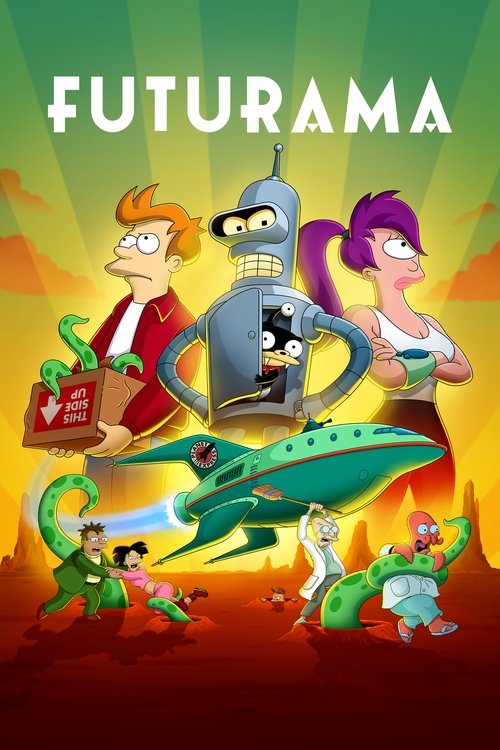
Futurama
Season 9 Analysis
Season Overview
On this orbit around the sun, our occasionally heroic crew embarks on mind-bending adventures involving birthday party games to the death, the secrets of Bender's ancestral robot village, A.I. friends (and enemies), impossibly cute beanbags, and the true 5 million-year-old story behind the consciousness-altering substance known as coffee. And, of course, the next chapter in Fry and Leela's fateful, time-twisted romance.
Season Review
Categorical Breakdown
The season contains an episode that pokes fun at the absurdity of 'cancel culture,' which functions as a critique of modern identity politics taken to an extreme. The casting and character development rely on established personalities and traits, not newly inserted immutable characteristics or racial grievances. The established incompetent white male character, Zapp Brannigan, remains a joke, but this is his original function.
The narrative focuses its satirical energy on modern, globalized corporate systems, such as an Amazon-like entity and cryptocurrency, which are treated as fundamentally flawed and dehumanizing. This is a critique of contemporary systems rather than a broad attack on Western civilization's heritage or ancestors, limiting the scope of civilizational self-hatred.
Leela continues in her established role as the competent, aggressive 'Girl Boss' figure, while the male lead, Fry, is the bumbling but kind-hearted foil, maintaining the show's original gender dynamic. This dynamic does not feature a newly introduced 'Mary Sue' trope or a significant emasculation of male characters beyond the show's norm. One episode deals with Amy and Kif's struggle to manage their new children, addressing the issue of natalism with characteristic dark humor rather than a clear anti-family lecture.
The season's plot points concentrate on issues like streaming TV, vaccines, and cryptocurrency, not on centering sexual identity or deconstructing the nuclear family beyond the show's long-standing satirical view of traditional relationships. There is no significant narrative focus on gender ideology or transitioning as a central theme of any episode.
The season includes a plotline that explores the classic conflict between faith and science, a recurring theme in *Futurama*'s history. The show maintains its tradition of lampooning organized religion (Robotology, the Space Pope) and favors a scientific, rationalist perspective. This continuous spiritual cynicism and mockery of belief systems pushes the score toward the higher end, but it is a series staple, not a new theme specifically vilifying Christianity.