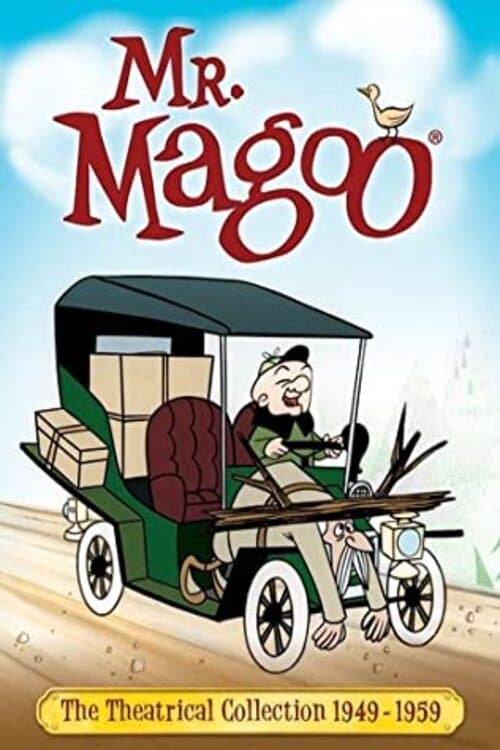
Trailblazer Magoo
Plot
The near-sighted one decides to take a hunting-and-fishing trip, and hires a Native American guide. He quickly grows impatient with the guide and takes over leading the way. He winds up in a big city and in a park lake, trail-blazing his way over park benches, statutes and through the zoo, releasing a lion along the way.
Get the Weekly Woke Watchlist
New and trending movies scored for woke bias, preachy messaging, and forced political themes — before you waste your evening.
No spam. One useful email per week.
Overall Series Review
Categorical Breakdown
The plot's central conflict is driven by the arrogant, wealthy, older white male (Magoo) dismissing the expert knowledge of his professional Native American guide, whose advice is entirely correct. The guide is portrayed as a competent authority on the wilderness, while Magoo is the 'dumb city slicker' whose hubris leads to chaos. The narrative portrays the wealthy white character as an incompetent buffoon who endangers others through his privilege and refusal to listen to the minority expert. The guide's characterization and name are mildly stereotypical for a 1956 cartoon, but the thematic structure clearly contrasts the privileged fool with the knowledgeable, ignored minority figure.
Magoo’s incompetence is a personal failing due to his near-sightedness and arrogance, not a critique of Western civilization itself. His self-proclaimed status as 'Daniel Boone Magoo' is a failure to live up to a Western pioneer legacy, which is celebrated as a high standard. The film does not frame Western culture or ancestors as fundamentally corrupt, but rather uses a structured Western city park as the setting for Magoo's individual farce. The institutions of the zoo and the park are the reality that Magoo's personal delusion runs up against.
The narrative focuses exclusively on the hunting and guiding dynamic between the two male characters. There are no female characters, 'girl boss' tropes, emasculation themes, or commentary on motherhood or family structure present in the plot. The gender dynamics are neutral.
The short film is a simple comedy of errors from 1956 focused on poor vision and a mistaken identity of location. There is no presence of sexual ideology, deconstruction of the nuclear family, or discussion of gender identity.
The plot is entirely focused on Magoo's physical comedy and mistaken-identity humor. There is no commentary on religion, objective morality, or anti-theistic sentiment. The moral lesson is simply a comical consequence of personal pride and stubbornness.
Get the Weekly Woke Watchlist
New and trending movies scored for woke bias, preachy messaging, and forced political themes — before you waste your evening.
No spam. One useful email per week.