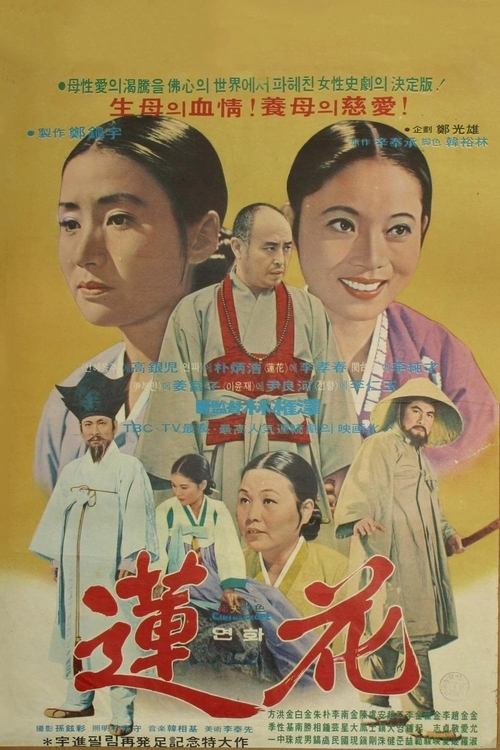
Yeonhwa
Plot
Get the Weekly Woke Watchlist
New and trending movies scored for woke bias, preachy messaging, and forced political themes — before you waste your evening.
No spam. One useful email per week.
Overall Series Review
Categorical Breakdown
The casting is exclusively South Korean, adhering to historical or local authenticity without any forced diversity, intersectional hierarchy, or vilification of one's own ethnic group. Characters are judged based on their moral conduct and adherence to societal roles, reflecting a universal or traditional meritocracy.
Produced during a period of strong national pride and under authoritarian rule, the content would not feature hostility toward one's own home, ancestors, or civilization. The narrative likely respects the sacrifices of ancestors and frames institutions like the family and nation as essential to order, rather than fundamentally corrupt.
The drama is rooted in a culture that emphasizes complementarian gender roles, which are celebrated. The female protagonist's strength is typically found in her virtue, endurance, and traditional roles (e.g., as a daughter, wife, or mother), not through an anachronistic 'Girl Boss' trope or anti-natalist messaging. Males are presented as figures of authority and protection.
As a production from 1975 South Korea, the presence of any alternative sexual ideology, gender theory, or deconstruction of the nuclear family is non-existent. The traditional male-female pairing is the absolute normative structure of the society and the narrative.
The moral framework is based on objective, transcendent values, typically rooted in Confucian ethics or general traditional morality. Faith and religious structures, whether Buddhist, Confucian, or Christian, are generally presented as a source of moral guidance and strength, not as the root of societal evil or bigotry.
Get the Weekly Woke Watchlist
New and trending movies scored for woke bias, preachy messaging, and forced political themes — before you waste your evening.
No spam. One useful email per week.