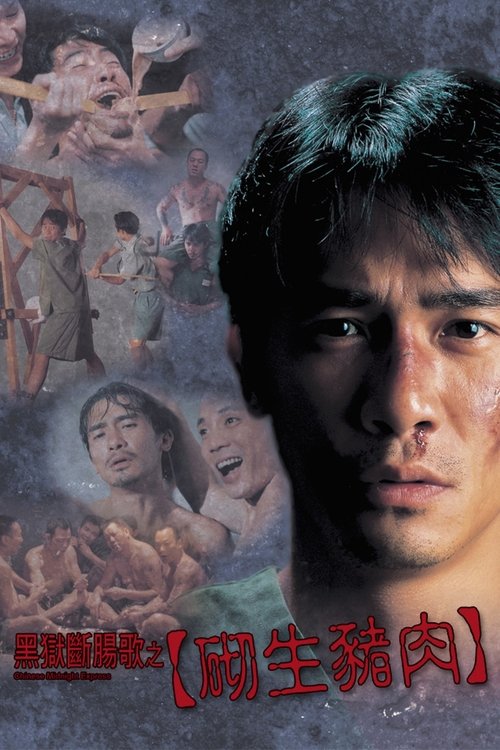
Chinese Midnight Express
Plot
The setting is 1960s Hong Kong, and righteous reporter Ching On (Tony Leung Chiu-Wai) publishes an article exposing corruption in the police force. Unfortunately, he's framed for drug distribution and confesses to the charges when the corrupt cops threaten his family. Forced to undergo the rigorous hazing rites of all new inmates, On struggles to regain hope and rise above his situation. Meanwhile, On's loyal girlfriend (Pinky Cheung Man-Chi) is terrorized by the cops who put him away, and On faces new challenges, and even finds new allies, while stuck in prison.
Get the Weekly Woke Watchlist
New and trending movies scored for woke bias, preachy messaging, and forced political themes — before you waste your evening.
No spam. One useful email per week.
Overall Series Review
Categorical Breakdown
The film’s central conflict is a universal struggle between a righteous man (Ching On) and a corrupt police/prison system, operating on the principle of character merit versus institutional evil. All main characters share the same immutable characteristics, and the narrative contains no lecturing on race, privilege, or intersectional hierarchy. The hero is judged by the content of his soul and his fight for justice.
The narrative is a direct, localized critique of the corrupt police and prison institutions operating in 1960s colonial Hong Kong. This is a call for justice and humane treatment within the existing society, not an expression of hostility toward one's own home, ancestors, or core civilizational values. The hero embodies an 'indomitability of the human spirit' which serves as a shield against chaos and corruption.
The male protagonist is a classic principled hero whose actions drive the plot. Men are depicted as either deeply toxic and evil (the corrupt police/guards) or protective and supportive (On and his prison allies). The loyal girlfriend is victimized by the villains but displays agency by entering a bargain to secure justice and revenge against her attacker, falling short of the 'perfect Girl Boss' trope, but also not being purely passive. The plot celebrates the male-female pair bond.
The story centers on the traditional male-female pairing of the protagonist and his loyal girlfriend, whose relationship the villains seek to destroy. The core plot and themes are focused on justice, corruption, and survival. There is no indication of centering alternative sexualities, deconstructing the nuclear family, or lecturing on gender theory.
The film operates on a foundation of Transcendent Morality, establishing a clear line between the Objective Truth of justice and the moral evil of corruption and injustice. The hero's righteous stand and resilience are portrayed as a moral and spiritual strength against the depravity of the system. There is no hostility toward traditional religion or suggestion that morality is merely subjective 'power dynamics'.
Get the Weekly Woke Watchlist
New and trending movies scored for woke bias, preachy messaging, and forced political themes — before you waste your evening.
No spam. One useful email per week.