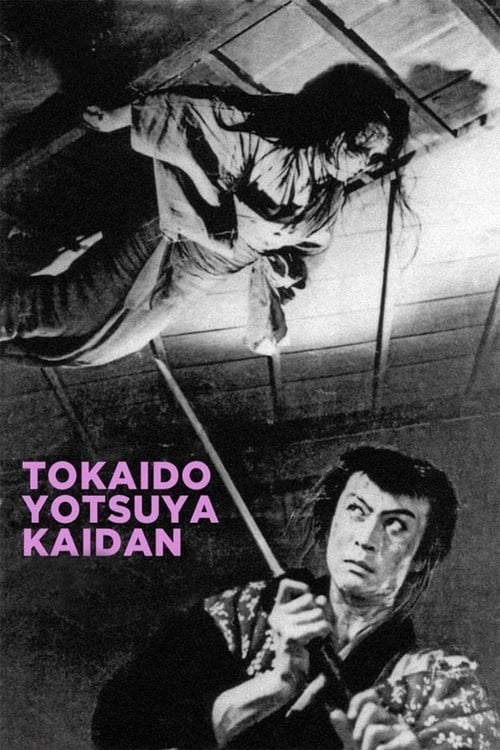
The Ghost of Yotsuya
Plot
This horror tale adapts the Japanese legend which tells of a man who faces the consequences of betraying his wife in order to acquire wealth and power.
Get the Weekly Woke Watchlist
New and trending movies scored for woke bias, preachy messaging, and forced political themes — before you waste your evening.
No spam. One useful email per week.
Overall Series Review
Categorical Breakdown
Characters are judged solely by their moral character, exemplified by the villain's downfall due to his greed and murderous ambition. The story is set in a specific historical context in Japan, and the casting is historically authentic. The central conflict is about individual vice and social status, not modern intersectional identity or race.
The movie is a direct adaptation of the most famous ghost story in Japanese history and folklore, treating the source material and setting with respect. The narrative focuses on the moral failure of a wicked individual, Iemon, and his partner in crime, not on framing Japanese society or cultural heritage as fundamentally corrupt or racist.
The core tragedy stems from the destruction of the marital and familial unit: a husband betrays and murders his loving wife and mother of his child. The female protagonist, Oiwa, is a victim who transforms into a powerful, righteous avenger, which gives her great agency but is clearly motivated by a desire for justice against a heinous moral crime, not a critique of the institution of marriage or motherhood itself. Her power is a consequence of betrayal, not a 'Girl Boss' trope.
The narrative centers entirely on a traditional heterosexual marriage and the destruction of the nuclear family unit. Alternative sexualities or gender ideology are not present, nor is there any deconstruction or lecturing on these topics.
The entire plot rests on the concept of transcendent morality. The universe, through the supernatural intervention of the ghost, delivers objective and inescapable justice for Iemon's extreme moral evil. His flight to a Buddhist temple for sanctuary acknowledges a traditional spiritual framework where morality is not subjective.
Get the Weekly Woke Watchlist
New and trending movies scored for woke bias, preachy messaging, and forced political themes — before you waste your evening.
No spam. One useful email per week.