Kamen Rider
Season 11 Analysis
Season Overview
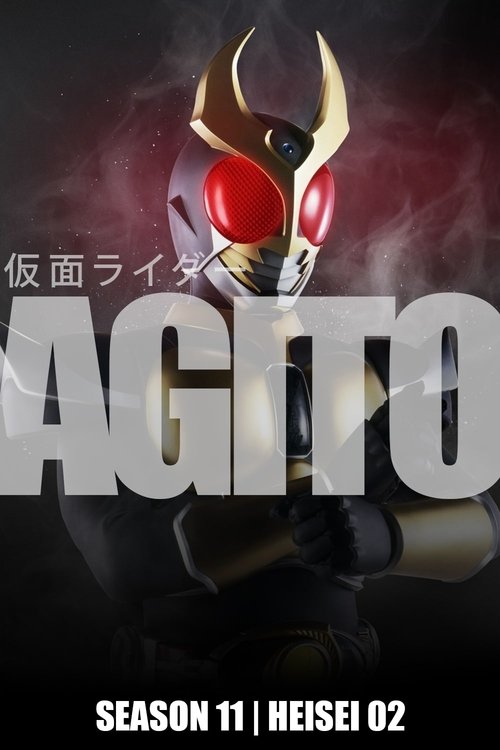
A man with amnesia, Tsugami Shoichi, is awoken to his powers of Agito. With Hikawa Makoto (man who equips G3) and Ashihara Ryo (transforms into Gills), he is at the mercy of his destiny.
Season Review
Categorical Breakdown
The narrative's central conflict revolves entirely around the 'potential of humanity' and the personal merit of the individual heroes versus an otherworldly creator. Race and ethnicity are not narrative drivers, as the cast is uniformly Japanese (which is the cultural norm for the production). Characters are judged by their actions, heroism, and personal growth, reflecting a system of universal meritocracy.
The series does not demonize Japanese culture, history, or ancestry. The conflict is against a universal, extra-cultural 'Overlord of Darkness' who seeks to stop human *evolution* to maintain a strict, controlled order. This critiques a restrictive, absolute external authority, not the institutions (family, nation) of the home culture. The main characters fight to protect the human world, viewing humanity's potential with gratitude and hope.
The core story is centered on the three male Kamen Riders and their personal dramas. Female characters primarily exist as moral support (like Mana Kazaya) or secondary figures who help advance the male protagonists' development, a common dynamic in the franchise's era. There are no 'Girl Boss' tropes; female characters generally have complementary roles, and no strong anti-family or anti-natalist messaging is present.
The primary structure is strictly normative. All relationships and romantic subplots are heterosexual. The main Rider's friendship with another male lead contains a fleeting, humorous line where the hero questions if their bond is 'love,' but the subtext is immediately ignored and the dynamic is consistently portrayed as an intense male friendship (bromance). Queer theory or gender ideology is not a thematic focus, nor is it a part of the world’s conflict.
The conflict is explicitly rooted in a rebellion against a 'God' figure, the Overlord of Darkness, who is portrayed as a creator who views evolving humanity as a threat to his divine order and thus seeks their extermination. The show uses clear Judeo-Christian motifs, framing the antagonist and its monsters (the Unknowns) as divine beings/angels that kill humans who possess the power to be an Agito. The moral conclusion is that humanity achieves true purpose and self-determination by successfully resisting this transcendental authority and living without its 'protection'.