Kamen Rider
Season 12 Analysis
Season Overview
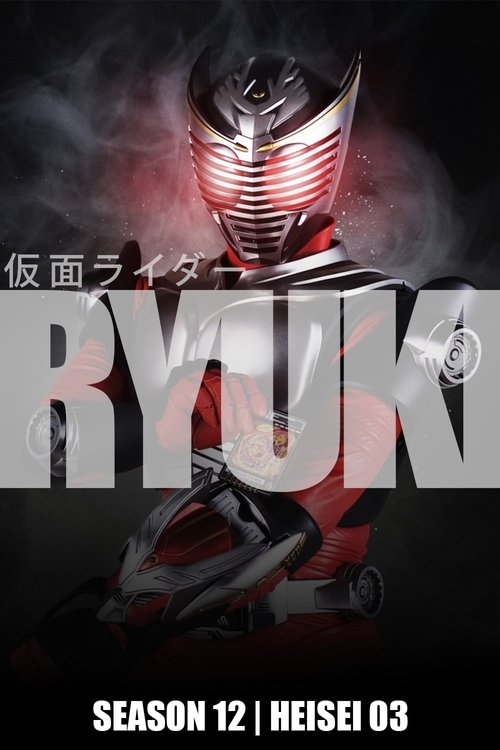
Thirteen Card Decks were created for thirteen Kamen Riders. They make Contracts with monsters from the mysterious Mirror World, a parallel dimension opposite to our own in which only the Kamen Riders can exist. The Riders draw on their monsters' strength in exchange for feeding them the life force of the creatures they destroy. The creator of the Advent Cards has only one rule: that there can be only one Kamen Rider. The others must be killed, and the sole victor will be granted a single wish, which leads to a conflict known as the Rider War.
Season Review
Categorical Breakdown
The Rider War is driven by individual, private, and universal human desires like saving a loved one, gaining eternal life, or seeking revenge, which is the definition of character merit and motivation, not immutable characteristics. The narrative contains no elements of racial or intersectional hierarchy, no vilification of 'whiteness,' and no forced diversity in the Japanese setting.
The conflict is purely moral and philosophical, focusing on the dark side of human nature and ambition, which is a universal critique rather than an attack on a specific civilization or heritage. The setting is contemporary Japan (news journal, law offices, street life) and the primary motivation of the main character, Shinji Kido, is to protect innocent people from an outside threat (Mirror Monsters), affirming the value of the home and community he is defending.
The main civilian female lead, Yui Kanzaki, has a storyline that revolves around searching for her brother and primarily functions to provide moral and domestic support for the two main male protagonists, placing her in a traditional secondary role. One Kamen Rider, Femme, who appears in supplementary media, is a female character who is a calculating con-artist seeking revenge, avoiding the 'Mary Sue' trope. Male characters are complex, flawed, and often evil (e.g., a serial killer, an amoral lawyer, a cynical young man), not bumbling or emasculated idiots.
The main storyline contains a normative structure with no centering of alternative sexualities or discussion of gender ideology. Any interpretation of a relationship between two male main characters (the lawyer and his butler) as queer is a subtextual reading from fan commentary and not explicitly stated as a narrative theme in the show. The show focuses on the life-and-death stakes of the war and individual character desires.
The creator of the Rider War is an eccentric human, not a deity, and the conflict is entirely secular, centered on the power of a personal wish. The series heavily explores the notion that 'one man's justice is another's injustice,' which creates a powerful theme of moral relativism and a spiritual vacuum, but it is a philosophical critique of justice itself, not a direct attack or hostility toward religious faith or institutions.