Kamen Rider
Season 2 Analysis
Season Overview
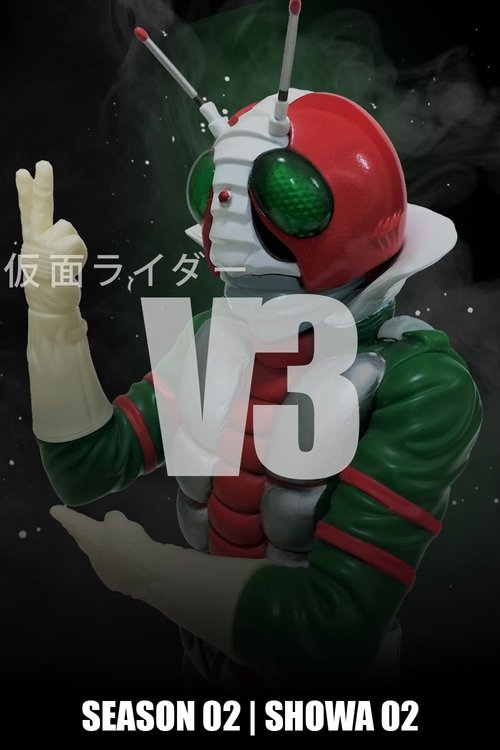
This series followed Shiro Kazami on his quest to gain revenge against Destron, the group that murdered his family. Later on, Riderman, the fourth Kamen Rider is introduced as the first long term anti-hero Kamen Rider. The original two Kamen Riders also make various appearances over the course of the series to help Kazami.
Season Review
Categorical Breakdown
Characters are judged solely on their merit as a hero or their villainy as a member of Destron, not on immutable characteristics. The protagonists are all members of the Kamen Rider organization, unified by their status as cyborgs fighting for justice. The setting is modern Japan, and the casting is nationally authentic with no forced racial or identity politics messaging.
The central mission of the Kamen Riders is to protect Japan, particularly Tokyo, from the global conquest plots of the terrorist organization Destron. The narrative treats institutions like the family (whose destruction motivates the hero) and the nation as worthy of self-sacrifice and protection. The hero's journey is a patriotic defense of his home culture and community against a foreign, corrupting force.
The core group of heroes (the Kamen Riders) and the mentor (Tobei Tachibana) are all male. The main female character, Junko Tama, serves as a loyal assistant at headquarters and is frequently placed in peril, requiring the male hero, V3, to rescue her. The show presents a clear and traditional division of protective and supportive gender roles, featuring strong masculinity and complementary roles for the female characters, which is the antithesis of the 'Girl Boss' trope.
The series adheres to a completely normative structure. The hero's motivation stems from the murder of his traditional nuclear family (parents and sister). The show is a classic 1970s children's action program focused on male heroes, containing no elements of queer theory, gender ideology, or public centering of alternative sexualities.
The narrative operates within a framework of transcendent morality where the battle is between the objectively evil Destron organization and the objectively good Kamen Riders fighting for justice. The heroes' sense of duty and righteousness acts as a source of strength, aligning the show with a higher moral law and acknowledging objective truth without engaging in anti-religious commentary.