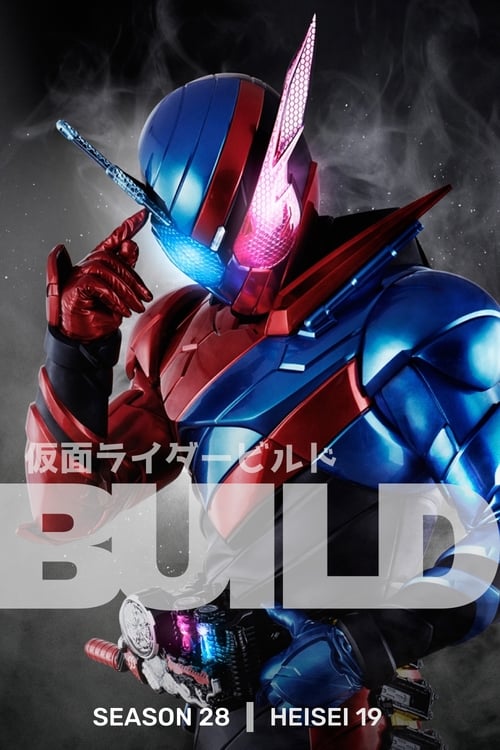
Kamen Rider
Season 28 Analysis
Season Overview
10 years after the Pandora's Box disaster divided Japan into three separate nations, unidentified lifeforms called 'SMASH' have appeared. To fight them, a prodigy physicist with no memory utilises the Full Bottles to transform himself. This man is Sento Kiryu, Kamen Rider Build.
Season Review
Categorical Breakdown
The core theme is 'identity' as a matter of personal choice and will, not immutable characteristics or intersectional categories. The protagonist fights to overcome a villainous past identity; his alien-lineage partner chooses heroism over destiny. Character worth comes from a commitment to justice, epitomizing universal meritocracy. The cast is culturally homogeneous (Japanese), centering on political and scientific conflict rather than race.
The series presents a strong critique of three present-day, nationalistic governments that exploit a civil war for power and profit. It is a criticism of corrupt institutions and warmongering, framing them as fundamentally broken and manipulated by an alien enemy. The heroes' ultimate goal is to re-unify the nation and establish 'love and peace,' positioning the home culture as worth saving and restoring, not fundamentally corrupt.
Female characters like Misora and Sawa are intelligent and possess essential skills (purification power, investigative reporting). They are not perfect 'Mary Sues' but function primarily in non-combat support roles to the male protagonists. The male characters are competent, flawed, and the main drivers of action. The narrative explores themes of masculinity, legacy, and fatherhood extensively. Anti-family or anti-natal messaging is absent.
The narrative follows a normative structure. Sexuality is not a plot point, a defining trait, or a source of political lecturing. The focus is on the war, science, and the identity struggle of the primarily male hero cast. No gender ideology or deconstruction of the nuclear family is present.
The show replaces traditional religion and spiritual faith with 'science' and 'love and peace' as the moral anchors. The conflict is driven by a sci-fi artifact and an alien lifeform. There is no explicit attack or vilification of religious faith or its followers. Morality is transcendent, based on fighting for human life and justice, not subjective power dynamics.