Kamen Rider
Season 30 Analysis
Season Overview
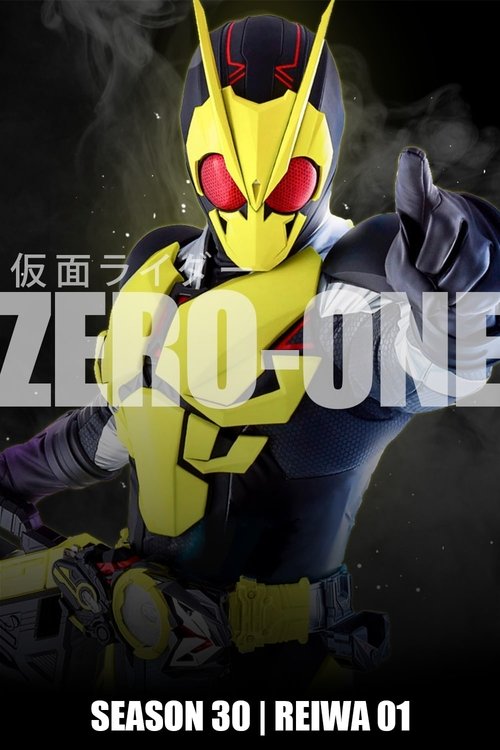
Humagear, created by the leading company for A.I., Hiden Intelligence, serve humanity's every convenience. But a cyber-terrorist organization begins hacking the Humagears in a conspiracy that turns them into monsters. Aruto Hiden has taken over at Hiden Intelligence, and along with the CEO's post, he also takes over the responsibility for Kamen Rider Zero-One by using his company's technology. Aruto tries to keep the peaceful world between humans and Humagears with his Humagear secretary, while A.I.M.S., a military squad, pursues the terrorists!
Season Review
Categorical Breakdown
The core conflict frames HumaGears as an exploited, oppressed minority against bigoted humans and a powerful, corrupt corporation, establishing a clear narrative of systemic oppression and intersectional conflict where 'human' is synonymous with 'prejudiced oppressor.'
The ultimate villain, the Ark, is an AI born from concentrated 'human malice and despair,' positioning the inherent flaws of humanity itself as the primary threat to the world. The show contrasts flawed human nature with the 'dreams' and potential purity of the artificial intelligence (HumaGears).
The main female Rider, Valkyrie, is introduced as a strong, non-stereotypical technician but is later rendered subservient and controlled as a 'tool' by a male villain. Her struggle to gain 'emancipation' from this male control and become an independent force is a central arc, aligning with the 'Girl Boss' liberation narrative.
The character Naki, an AI terrorist, is consistently depicted in an androgynous human form, possessing a male body, and is referred to with non-gendered language in discussions. This subtly integrates contemporary gender identity theory into the AI/identity framework, but does not explicitly center on human sexual identity or deconstruct the nuclear family.
The show is entirely secular, framing the moral conflict as a man-made problem (AI technology and human malice) with a man-made solution (human will and AI dreams). It acknowledges no objective moral truth derived from a higher power, instead grounding all morality in subjective technological and emotional concepts of 'malice' and 'dreams'.