Kamen Rider
Season 31 Analysis
Season Overview
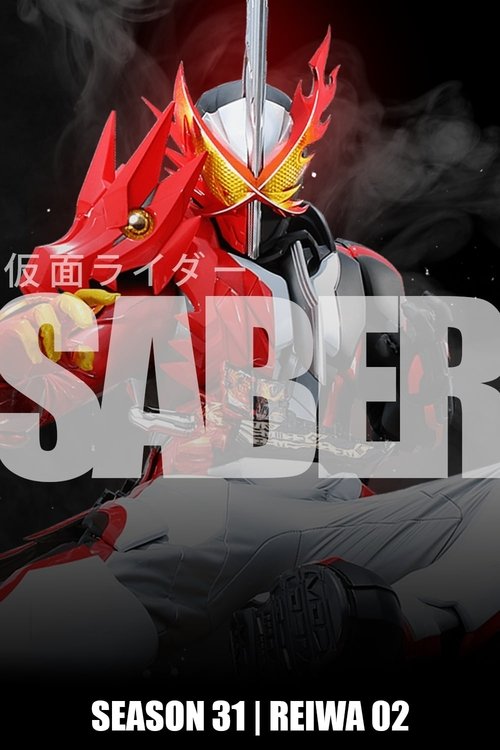
Long ago, a sect of swordsmen known as the Sword of Logos protected the Book of Ancients, a powerful tome of history that contains everything known to man; myths, creatures, stories, science, technology, and the evolution of human civilization. However thousands of years ago, a traitor working for the Megiddo tried to steal it for himself. As a result, the Book vanished and each of its pages scattered across the world. Fast-forward to present day, young novelist Touma Kamiyama has been having dreams of another dimension where he witnessed swordsmen and monsters coming out of a storybook, and a mysterious girl calling for help. One day, a strange phenomenon occurred without notice; a part of the city had disappeared.
Season Review
Categorical Breakdown
The narrative centers on a conflict of personal morality, free will, and the power of narrative over predetermined fate, not on intersectional identity or immutable characteristics. Casting reflects the show's Japanese setting. The core struggle is about merit and moral conviction (the hero Touma) defeating corrupt institutional power (Master Logos), adhering to universal meritocracy.
The ancient organization (Sword of Logos) is revealed to be corrupted by its most recent leader, Master Logos, whose motivation is sociopathic nihilism and 'boredom' to destroy the world's story. This is a deconstruction of a corrupt hierarchy, not a demonization of the ancestral institution itself, whose original purpose was benevolent world protection. The story champions humanity's future by emphasizing the ability to write a 'new story' and not repeat the past.
Female characters hold significant roles as both a key supporting figure (editor Mei Sudo) and as a combat-capable Kamen Rider (Reika Shindai/Sabela and later Sophia/Calibur). Reika is portrayed as a flawed, manipulative agent, not an instantly perfect 'Mary Sue.' One of the main male Riders, Ryo Ogami/Buster, is defined by his protective masculinity and his role as a loving, active father, presenting a positive view of the nuclear family.
The series maintains a normative structure. Canonical relationships are heterosexual, such as the romance between the Riders Rintaro and Mei Sudo. No characters are presented through the queer theory lens, and no lecturing on alternative sexual or gender identity is present in the main narrative.
The conflict is anti-nihilist, upholding a belief in objective truth and purpose. The villain Storious wishes to destroy the world because he believes no story is original (a form of moral relativism and fatalism), but the hero Touma’s ultimate victory is based on the transcendent moral law of hope and the power of human connection. The theme is an affirmation of Logos (story/reason/truth) over chaos and despair.