Kamen Rider
Season 32 Analysis
Season Overview
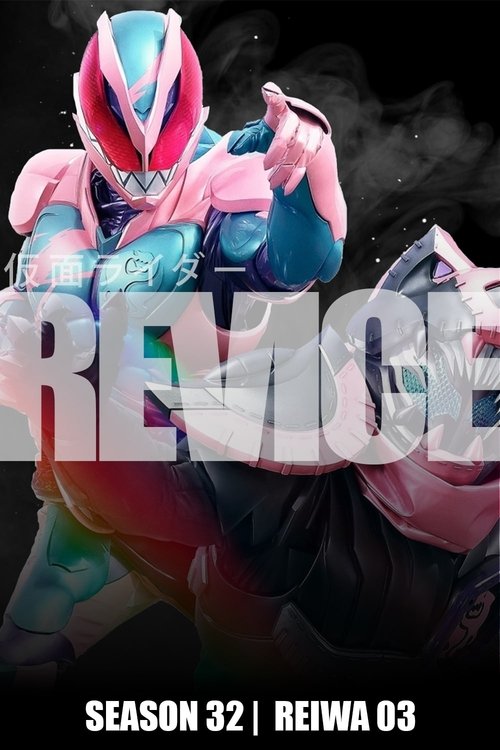
In 1971, a scientific expedition in Latin America had uncovered an ancient artifact containing the remains of the demon Giff, leading to the creation of the Vistamps. In the present day, the remains of Giff now lie in the hands of a demon cult called the Deadmans, who seek to resurrect him by converting peoples' inner demons into their fold. Fenix, a governmental organization opposing the Deadmans, have developed the Revice Driver for someone with complete control over their inner demon. Ikki Igarashi, a young man who runs a public bath with his family, comes into acquisition of the belt while forming a contract with his inner demon Vice. Together, as Kamen Rider Revi and Vice, they are Kamen Rider Revice!
Season Review
Categorical Breakdown
The narrative is centered on the deeply personal and familial struggle of the Igarashi family and the inner demons they must control. Race, class, and intersectional politics are absent from the core conflict, which is a purely mythological battle against a demon cult. Character merit and personal growth are the deciding factors for success or failure.
The central pillar of the story is the Igarashi family and their defense of their home (the public bathhouse), representing a strong pro-family and pro-community stance. The main threat is an ancient demon and a cult, not a critique or deconstruction of Japanese society or heritage. The governmental organization is shown to be corrupt at the leadership level, which is a standard plot device for a conspiracy, not a demonization of the entire civilization.
The series features a prominent and capable female Rider, Sakura/Kamen Rider Jeanne, who is an accomplished martial artist even before transforming. Her arc focuses on her struggle with the fear of being weak, demanding self-acceptance rather than instant perfection, which moves her away from the 'Mary Sue' trope. The emphasis on the entire Igarashi family, with both the mother and father as active heroes, actively celebrates the traditional and complementary family structure, countering anti-natalist messaging. The male characters are complex and flawed, not consistently bumbling or emasculated.
The core relationships and structure revolve around the normative nuclear family (the Igarashis). The theme of inner demons, duality, and bonding between male characters is central, but this does not escalate into the centering of alternative sexualities or overt lecturing on gender ideology within the primary narrative. The relationship between the female lead and a former female antagonist is a common fan-coded trope, but the show itself does not frame the conflict through a queer theory lens.
The primary antagonist, Giff, is a demon, and the Deadmans are a demon-worshipping cult. The show frames morality as objective; the cult is definitively evil, and the heroes' fight to protect humanity and master their inner 'devils' promotes a transcendent value system based on love and self-control. The narrative does not contain hostility toward any real-world religion, maintaining a standard Tokusatsu good-versus-evil moral framework.