Kamen Rider
Season 33 Analysis
Season Overview
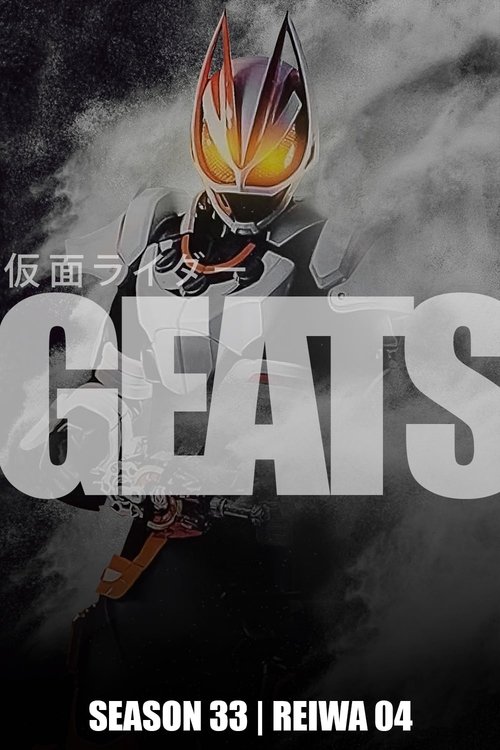
Congratulations! As a result of rigorous judging, you have been selected. From now on you will be a "Kamen Rider." Equip the "Desire Driver" and enter the "Desire Grand Prix." The "Desire Grand Prix" is a game of survival in which players must protect the peace of the city from the "Jamato," an unknown entity that attacks people, and survive to the end. The winner will be given "the right to make their ideal world come true." The greatest game awaits you to save people and make your own hopes come true. Welcome to the "Desire Grand Prix."
Season Review
Categorical Breakdown
The narrative universally applies its premise of 'individual desire' to all characters regardless of background, placing meritocracy (or in this case, competence in the game) ahead of immutable characteristics. The central cast is predominantly Japanese, which is the cultural norm for the production's country of origin. The plot does not center on race, systemic oppression, or intersectional hierarchies as a driving force for conflict or character development.
The score is not high because the show does not vilify the nation's *heritage* or *ancestors*. However, it criticizes the *future* of the culture, portraying the organization running the game as people from the future who have become cynical, viewing present-day life and suffering as disposable entertainment. This is a pointed critique of cultural degradation, specifically consumerism and reality TV voyeurism, framed as a moral and social decline of one's own society.
Female characters are numerous and powerful, holding key roles both as Riders (like Kamen Rider Na-Go and Nago) and as central figures in the game's mythological power structure (the 'Goddess of Creation' and her successor). Women are neither portrayed as instantly perfect nor are men universally incompetent; both genders exhibit high competence, deep flaws, and protective instincts. A main female Rider's arc revolves around finding genuine family connection, which acts against the anti-natalism trope by validating the search for familial love.
The core plot adheres to a normative structure, with traditional male-female pairings and family units serving as standard character backgrounds, or in the case of the celebrity Rider, the source of her original trauma. The main narrative does not center on alternative sexualities, gender ideology, or the deconstruction of the nuclear family. Sexuality is not a theme or subject of political lecturing within the season.
The score reflects the secularization of the spiritual. The power system is built around a literal 'Goddess of Creation' and a main Rider achieves a form of divinity, but these are scientific-fantasy *plot mechanics* and wish-fulfillment concepts, not genuine religious figures. The show is not hostile toward traditional religion; it simply occupies the spiritual vacuum with a materialistic 'game' where one's greatest desire becomes the highest moral law. Morality is framed as a subjective construct determined by the winner's wish, embodying a form of moral relativism derived from individual ego.