Kamen Rider
Season 8 Analysis
Season Overview
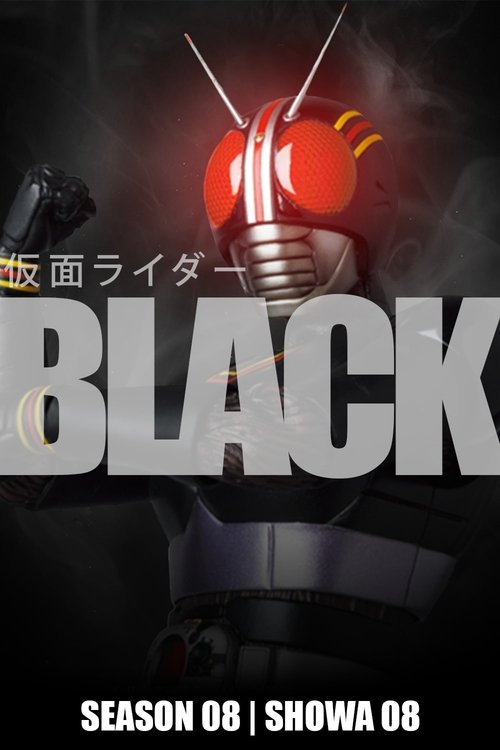
After being kidnapped by the cult Gorgom on the night of their 19th birthday, stepbrothers Kotaro Minami and Nobuhiko Akizuki are submitted to a mutant surgery with the purpose of becoming the candidates to be the next Creation King. Kotaro escapes before the brainwashing, with help from his foster father, and turned against Gorgom. He soon finds out the horrific truth from his stepfather: Gorgom originally killed his true parents. Later on, Kamen Rider Black must battle with his brother, who has become the trump card of Gorgom, Shadow Moon.
Season Review
Categorical Breakdown
Characters are judged by their moral choices and actions (Kotaro chooses good; Nobuhiko is forced into evil). The conflict is a moral and personal one between two brothers who are both Japanese; the show does not rely on race, immutable characteristics, or intersectional hierarchy for its narrative. Diversity politics and concepts like 'whiteness' are absent, consistent with a Japanese production from 1987.
The entire premise is the hero, Kamen Rider Black, fighting the evil cult Gorgom, which aims to 'destroy humanity and eliminate all traces of its civilization and culture'. The narrative affirms the value of human life and civilization, positioning the cult as the enemy of society. The show respects institutions of family (the bond between the brothers) and the need to protect the home culture.
Female characters are in traditional supportive roles for the male hero. The central drama revolves around the male hero (Kotaro) and the male antagonist (Nobuhiko/Shadow Moon). The narrative is focused on protective masculinity, courage, and self-sacrifice, without featuring 'Mary Sue' or 'Girl Boss' tropes. There is no presence of anti-family or anti-natal messaging.
The show is a tokusatsu children's series from the 1980s. The plot is focused on a direct, physical battle between a superhero and a monster-cult. Sexuality and gender ideology are not discussed or centralized in the narrative. The structure remains normative, with no deconstruction of the nuclear family.
The villains, Gorgom, are an ancient evil cult led by the 'Creation King,' and they are unequivocally depicted as the source of all evil, not a representation of traditional religion. The hero is driven by a desire for 'justice and freedom', acknowledging an objective moral framework where evil must be defeated. Morality is transcendent, not subjective 'power dynamics.'