The Fall of Rock and Roll
Plot
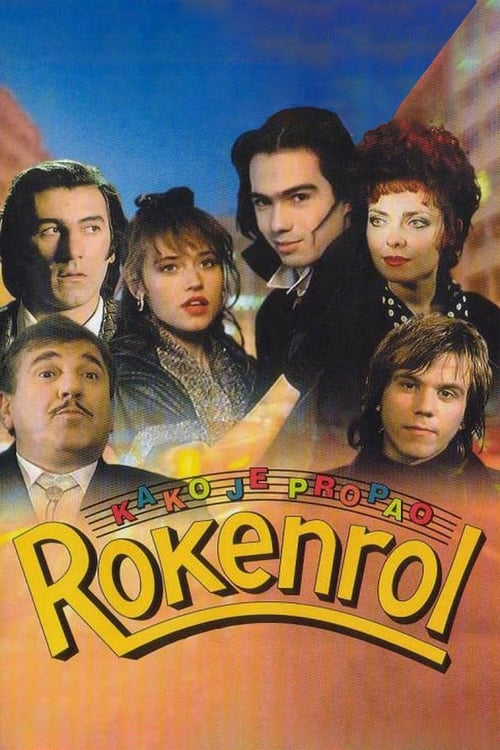
Omnibus film, consisting of three independent parts: in the first story, Koma, a failed rocker, wants to prove to his producer father that newly composed music could be better than his. He becomes a mysterious masked folk singer-known as Ninja. In the second, Dracula is killed... again. This time he does not dies oby way of a wooden stake, a silver bullet, or a cross. A blonde woman manages to deprive him of eternal life without the help of sunrise. The last story is about Eve and Djuro. She is creator, he is a musician. They live in a harmonious relationship, but a love letter brings division among them.
Get the Weekly Woke Watchlist
New and trending movies scored for woke bias, preachy messaging, and forced political themes — before you waste your evening.
No spam. One useful email per week.
Overall Series Review
Categorical Breakdown
The central conflict is cultural and generational, pitting the artistic merit of rock against the commercialism of folk music, without reference to race, systemic oppression, or intersectional hierarchy. Character merit is judged by artistic integrity and success, not immutable characteristics.
The film functions as an internal satire of Yugoslavia’s popular culture and its descent into commercialism and cultural decay, which is framed as a lament for a lost cultural ideal (rock and roll). This is a critique of a contemporary internal system, not a blanket demonization of Western civilization, home culture, or ancestors.
The Dracula segment features a competent woman successfully resolving the conflict without needing men or traditional methods, giving a slight nod toward 'Girl Boss' competence. The third story features a female 'creator' in a relationship. There is no evidence of systematic male vilification, emasculation as a moral lesson, or anti-natalist messaging.
The core relationships and character dynamics presented are heterosexual, focusing on a father-son conflict, a couple in a 'harmonious' relationship, and a male musician's career. The film does not contain or center on alternative sexualities, gender ideology, or the deconstruction of the nuclear family.
The second story's premise involves defeating the mythical figure of Dracula without the use of religious symbols like the cross or wooden stake. This is an irreverent subversion of a horror trope in a farcical context, but it does not function as an explicit condemnation of Christianity or a lecture promoting moral relativism.
Get the Weekly Woke Watchlist
New and trending movies scored for woke bias, preachy messaging, and forced political themes — before you waste your evening.
No spam. One useful email per week.