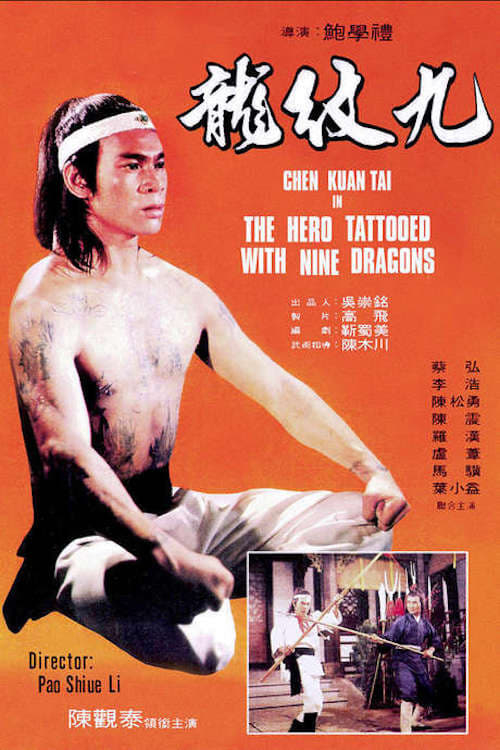
The Hero Tattooed with Nine Dragons
Plot
He's just a hotheaded, rude and violent young man who loves punching people. His family are killed in a revenge attack and he seeks revenge.
Get the Weekly Woke Watchlist
New and trending movies scored for woke bias, preachy messaging, and forced political themes — before you waste your evening.
No spam. One useful email per week.
Overall Series Review
Categorical Breakdown
The entire cast and setting are Chinese. The main conflict is driven by the hero's personal moral failure (arrogance and violence) and the universal value of seeking justice for a family tragedy. Characters are judged solely by their actions, martial arts skill, and honor, embodying a universal meritocracy.
The film is a product of Hong Kong/Taiwanese cinema, not Western. The narrative is a defense of home and family against local corruption and criminality, which is an affirmation of cultural values. The hero's goal is to restore justice and honor within his own community, not to harbor hostility toward his civilization or ancestors.
The plot centers entirely on the male hero's quest for revenge and his personal growth from a 'brash temper' to a 'humble hero fighting for justice.' This narrative celebrates traditional masculinity, responsibility, and the family unit. There is no evidence of a 'Mary Sue/Girl Boss' trope, male emasculation, or anti-natalist/anti-family messaging; the family tragedy is the emotional core of the film.
The narrative is a straightforward martial arts revenge drama. The plot contains no centering of alternative sexualities, deconstruction of the nuclear family, or lecturing on gender identity. The structure adheres strictly to traditional male-female pairing and a normative social order.
The core of the story is the hero's moral transformation—realizing the 'error of his arrogant ways' and seeking 'justice' and 'redemption.' This arc acknowledges a transcendent moral law and objective good (fighting for justice against murderers and gangsters), which is the opposite of moral relativism. The film does not target or display hostility toward religion, specifically Christianity.
Get the Weekly Woke Watchlist
New and trending movies scored for woke bias, preachy messaging, and forced political themes — before you waste your evening.
No spam. One useful email per week.