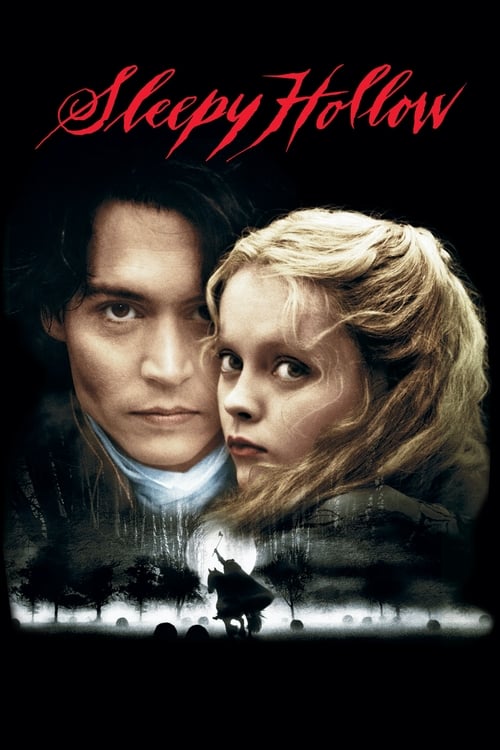
Sleepy Hollow
Plot
Skeptical young detective Ichabod Crane gets transferred to the hamlet of Sleepy Hollow, New York, where he is tasked with investigating the decapitations of three people – murders the townsfolk attribute to a legendary specter, The Headless Horseman.
Get the Weekly Woke Watchlist
New and trending movies scored for woke bias, preachy messaging, and forced political themes — before you waste your evening.
No spam. One useful email per week.
Overall Series Review
Categorical Breakdown
Characters are judged by their moral actions, not race, as the setting is racially homogeneous. However, the true antagonist, a white female, is motivated by revenge against the 'colonial American patriarchy' and the town's 'cultural misogyny' which ruined her family, framing the central conflict as a direct reaction to systemic oppression by white males. The primary corrupt figures who conceal the conspiracy are the white, male town elders.
The film criticizes the foundational culture, portraying the town's wealthy, colonial American patriarchy as fundamentally corrupt, hypocritical, and cruel. The hero, a proponent of modern science, is explicitly sent to dispense with the 'old ideas' and 'superstitions of the past' taken from Europe, suggesting the new American way is superior to the lingering European heritage and traditional communal institutions.
The protagonist, Ichabod Crane, is depicted as physically weak, emotional, and prone to hysterics, a deliberate feminization of the male hero archetype. The main villain is a cunning, powerful woman who orchestrates the entire plot, choosing power and ruthless revenge over the traditional expectations of a woman, which were to be 'married off for their child-bearing abilities.' The female lead, Katrina van Tassel, is an active partner who transitions into a 'heroine' and uses her own protective magic to help solve the mystery.
The core relationship is a traditional male-female pairing. The narrative does not feature alternative sexualities or gender ideology. Sexuality is private and the family structure is presented in its normative form, although the nuclear family unit is shown to be susceptible to manipulation and betrayal.
The narrative gives mixed messages on religion. While the church is acknowledged as a source of transcendent power that physically repels the demonic Headless Horseman, the film simultaneously critiques the town's Christian faith. It suggests that Christianity can serve as a 'mask of virtue,' allowing corrupt church-going town elders to harbor 'evil secrets' and inflict 'cruelty rather than mercy' on the less fortunate. The hero's rationalism and Katrina's folk magic are presented as the effective counter-forces to both the supernatural evil and the town's religious hypocrisy.
Get the Weekly Woke Watchlist
New and trending movies scored for woke bias, preachy messaging, and forced political themes — before you waste your evening.
No spam. One useful email per week.