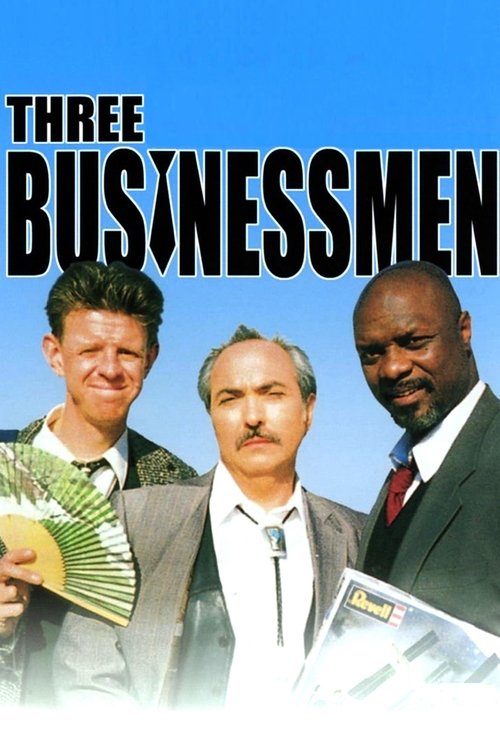
Three Businessmen
Plot
An American art dealer (Miguel Sandoval), who specializes in southwestern topaz, arrives by train in Liverpool. Similarly, a very proper British art dealer (Alex Cox), who specializes in African art, arrives in the same hotel. The two meet in the hotel's abandoned restaurant and decide to set off in finding an evening meal, which becomes problematic immediately when the Brit reveals he is vegetarian. While following their pursuit of a mutually acceptable meal, the main point of the film is their discourse en route to their various attempts at an eatery.
Get the Weekly Woke Watchlist
New and trending movies scored for woke bias, preachy messaging, and forced political themes — before you waste your evening.
No spam. One useful email per week.
Overall Series Review
Categorical Breakdown
Character dynamics focus on a clash of personalities (crude American vs. stuffy Brit) and their shared existential futility as art dealers in the global market, not on immutable characteristics or social hierarchy. The casting of the three main characters—representing Mexican-American, White British, and Black American backgrounds—is a functional choice to create a contemporary, colorblind parallel to the Three Kings Magi story.
The narrative examines the spiritual and physical decay in a Western city and the alienating nature of the 'Global Village' and modern commerce, but this is a broad cultural and economic critique, not a condemnation of Western civilization as fundamentally corrupt or racist. The film's conclusion uses the profound Western religious myth of the Magi to suggest a need for moral attention and spiritual grounding.
The film is a dialogue-driven piece focusing almost entirely on the philosophical and physical journey of three male characters. The narrative contains no significant female roles and therefore lacks any presence of the 'Girl Boss' trope, emasculation of males for political reasons, or anti-family messaging.
The film is entirely concerned with the professional and existential wanderings of the businessmen. The content does not feature or focus on any element of alternative sexualities, gender ideology, or the deconstruction of the nuclear family.
The film's surreal climax is a modern allegory of the biblical Three Kings/Magi, where the businessmen finally connect with a baby and offer gifts. This conclusion elevates the narrative toward transcendent meaning and moral reflection, which is the antithesis of anti-theism and moral relativism.
Get the Weekly Woke Watchlist
New and trending movies scored for woke bias, preachy messaging, and forced political themes — before you waste your evening.
No spam. One useful email per week.