Pokémon
Season 14 Analysis
Season Overview
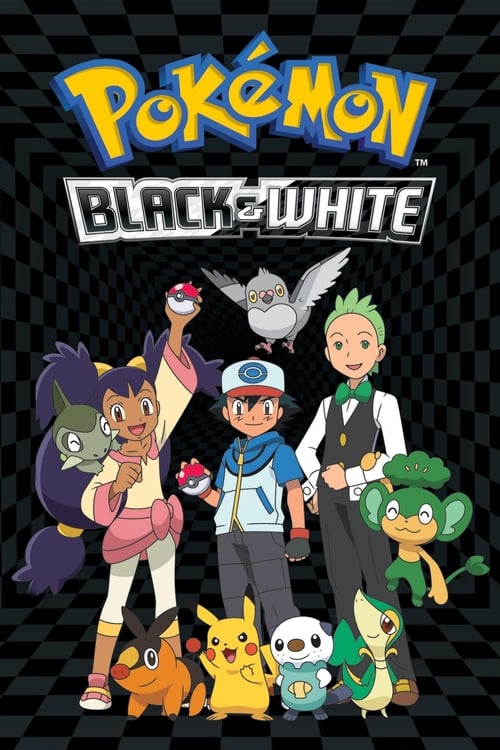
When Ash and his mother accompany Professor Oak to the distant Unova region, Ash discovers Pokémon that he’s never seen before… and that he can’t wait to catch! He may have Pikachu at his side together with new friends Iris and Cilan, but he’ll still need plenty of new Pokémon on his team if he wants to challenge Unova’s expert Gym Leaders. His quest to become a Pokémon Master just got even tougher!
Season Review
Categorical Breakdown
The introduction of Gym Leader Lenora, a dark-skinned woman, led to a pre-emptive change in her character design for the international anime release because her original depiction wearing an apron was thought to evoke the ‘Mammy stereotype’ outside of Japan. This action represents an early instance of altering content to conform to an intersectional-lens critique of racial representation. However, the main companion, Iris, is a minority character whose value is defined entirely by her aspiration and skill as a Dragon Master in training, not by her immutable characteristics.
The main antagonists, Team Plasma, are ideologically driven by the conviction that the human-Pokémon bond is a form of slavery and that the entire system of being a Trainer must be dismantled, which constitutes an attack on the foundational institution and culture of the world. This directly mirrors the deconstruction of heritage and home culture found in the Oikophobia definition. The narrative, however, resolves this by revealing the group’s true leader, Ghetsis, to be purely evil and manipulative, ultimately reaffirming the existing structure (the trainer-Pokémon bond) as benevolent and righteous.
The female lead, Iris, is a competent, strong character with an ambitious personal goal of becoming a Dragon Master. Her capabilities complement Ash’s journey without resorting to the 'Mary Sue' trope. Ash’s mother, Delia, maintains her classic, protective, and loving motherly role. The dynamics between male and female characters are standard for the franchise, centering on professional rivalry and friendship rather than gender conflict or anti-natalist messaging.
The plot focuses entirely on Pokémon battles, new creatures, and traditional adventure tropes. There are no storylines or character arcs that center on alternative sexualities, deconstruct the nuclear family, or lecture on gender identity theory for children. The structure is normative with private sexuality.
The central conflict introduced by Team Plasma and its leader, N, explores a philosophical debate about the nature of morality in the Pokémon world—whether the entire human-Pokémon system is morally right or fundamentally oppressive. This touches on moral relativism by questioning an objective truth. However, the narrative ultimately resolves the debate by reinforcing the objective moral good of the strong and voluntary trainer-Pokémon bond, a form of transcendent morality over the villain's subjective critique and manipulation.