Pokémon
Season 16 Analysis
Season Overview
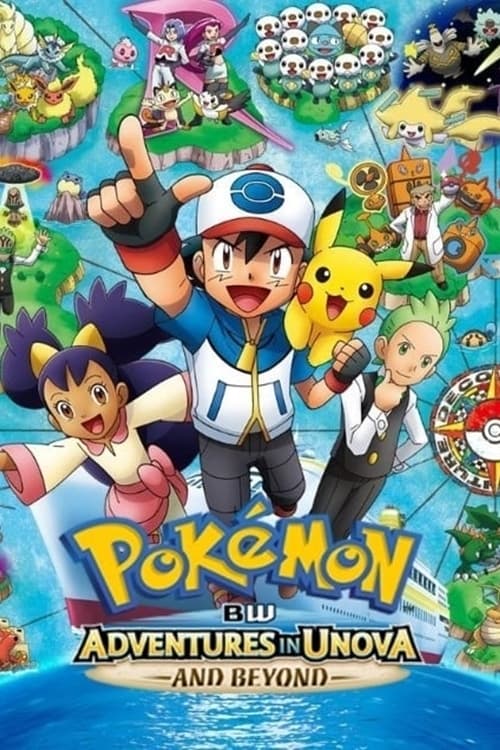
Ash and his friends Iris and Cilan have foiled Team Rocket’s latest evil plan, but a new danger lurks on the horizon! But first, with eight Gym badges in hand, Ash is ready to take on the region’s ultimate challenge: the Unova League, where he’ll face familiar rivals and new opponents in his ongoing quest to become a Pokémon Master! Meanwhile, Iris has been having some trouble connecting with her powerful and stubborn Dragonite—can a visit home to the Village of Dragons help sort things out for the aspiring Dragon Master? And what exciting new adventures await our heroes beyond the Unova League? The answers to come, as the journey continues!
Season Review
Categorical Breakdown
The narrative is centered on universal meritocracy; the protagonist Ash and his companion Iris, a character of color, advance entirely through skill, effort, and the strength of their bond with their Pokémon. There is no critique of 'whiteness' or reliance on immutable characteristics for status, as all trainers compete on equal footing based on ability. Iris's journey to become a Dragon Master is a long-term merit-based goal.
The score is low because the series frames institutions and traditional communities positively. Iris returns to the 'Village of Dragons' to consult her Elder and gain wisdom, which is depicted as a source of strength and cultural heritage, not corruption. The main ideological villain, N (Team Plasma), is critiquing the human use of Pokémon as tools, not demonizing a specific civilization or ancestors. The show maintains a respect for the established world structure.
Iris, the female co-lead, is an aspirational Dragon Master who is often stubborn and powerful, but her storyline deliberately counteracts the 'Mary Sue' trope. She struggles significantly to earn the respect of her powerful Dragonite, showing that mastery is earned through perseverance and even self-sacrifice, not instant perfection. While ambitious, she is not portrayed as a 'Girl Boss' whose success comes at the expense of emasculated male counterparts; Ash remains the central hero.
The season contains no explicit references to alternative sexualities, gender ideology, or the deconstruction of the nuclear family. The structure is normative, focusing on the G-rated adventures of young friends. Sexuality is not a topic of discussion or a feature of character identity.
The conflict with Team Plasma and N is based on opposing 'ideals' (pacifism/coexistence) and 'truth' (the reality of partnership and battle), not a conflict with traditional religion. The story acknowledges Objective Truth in the form of moral principles like kindness and respect for Pokémon, and faith is presented as the bond between trainer and Pokémon, a source of strength and transcendent meaning. No traditional religious figures or institutions are demonized.