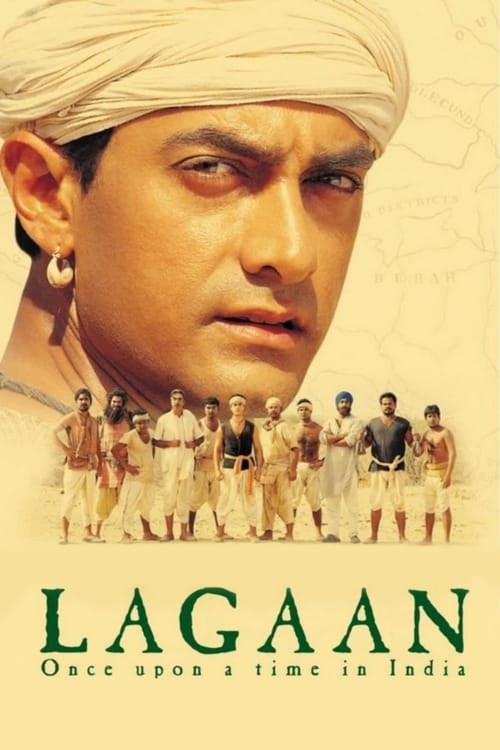
Lagaan: Once Upon a Time in India
Plot
The year is 1893 and India is under British occupation. In a small village, the tyrannical Captain Russell has imposed an unprecedented land tax on its citizens. Outraged, Bhuvan, a rebellious farmer, rallies the villagers to publicly oppose the tax. Russell offers a novel way to settle the dispute: he challenges Bhuvan and his men to a game of cricket, a sport completely foreign to India. If Bhuvan and his men can defeat Russell's team, the tax will be repealed.
Get the Weekly Woke Watchlist
New and trending movies scored for woke bias, preachy messaging, and forced political themes — before you waste your evening.
No spam. One useful email per week.
Overall Series Review
Categorical Breakdown
The plot establishes a clear binary between the oppressed Indian villagers and the British colonizers, who are overwhelmingly depicted as arrogant and abusive. Captain Russell, the main antagonist, embodies the cruel, entitled white male oppressor. The narrative frames the struggle as a contest between the colonized and the colonizer. However, the film actively resists intersectional hierarchy within the village by focusing on the hero Bhuvan’s immediate and successful confrontation of internal Hindu caste prejudice, demanding the inclusion of a Dalit (Untouchable) player based purely on his skill and merit. A sympathetic white British woman also breaks rank to aid the villagers, preventing the blanket vilification of 'whiteness'.
The movie is an explicit celebration of Indian village culture, traditional values, and national spirit. The narrative focuses on preserving the villagers' way of life, land, and ancestral heritage against an external, foreign-imposed system. Institutions like the village community, its leaders, and the land itself are viewed as vital and worthy of immense sacrifice. The primary self-criticism is the internal Hindu caste system, which the hero directly confronts and overturns in a unifying moment, not a deconstruction of the heritage itself.
Female characters hold traditionally complementary roles, providing domestic support, moral encouragement, and emotional strength, rather than participating directly in the masculine challenge of the cricket match. The main Indian female lead, Gauri, is a traditional love interest. A British female character, Elizabeth, actively helps the men learn the game against her brother's orders, demonstrating mild autonomy but not embodying the 'Girl Boss' trope. Masculinity in the form of Bhuvan is protective and heroic; motherhood and traditional gender roles are affirmed.
The narrative structure adheres strictly to the normative structure of male-female relationships. The central romantic tension exists within a traditional love triangle between a man and two women. There are no elements of alternative sexualities, gender ideology, or deconstruction of the nuclear family presented in the story.
Religious faith is a positive force. The protagonists, a team composed of Hindus, a Muslim, and a Sikh, are shown praying together and drawing strength from their respective beliefs to face the existential threat. The villainous Captain Russell and the British establishment mock the villagers' religious beliefs and customs. Faith, morality, and objective right (the unjust tax) vs. wrong (the oppression) are treated as real and transcendent.
Get the Weekly Woke Watchlist
New and trending movies scored for woke bias, preachy messaging, and forced political themes — before you waste your evening.
No spam. One useful email per week.