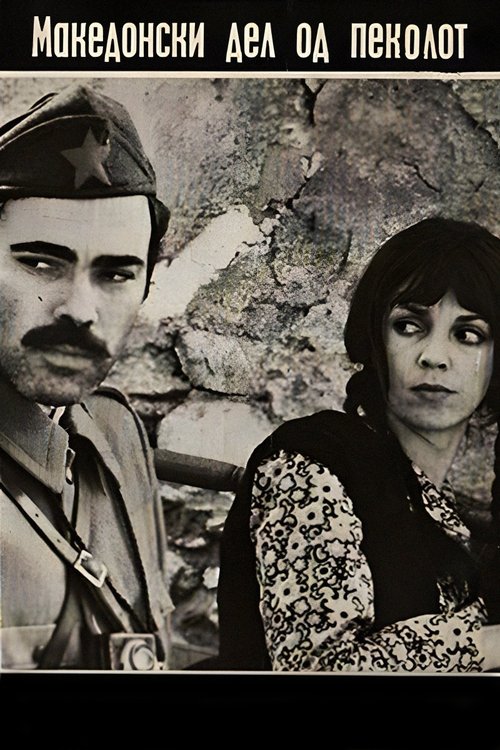
The Macedonian Part of Hell
Plot
At the end of the year 1942 and the start of 1943, to stop spreading the revolution in county of Bitola, bulgarian occupiers are reinforcing the persecutions and the acts of violence on civil population.
Get the Weekly Woke Watchlist
New and trending movies scored for woke bias, preachy messaging, and forced political themes — before you waste your evening.
No spam. One useful email per week.
Overall Series Review
Categorical Breakdown
The plot's central conflict is between the Macedonian national resistance (partisans/civilians) and the Bulgarian fascist occupiers. Character worth is determined by their commitment to the liberation cause, exemplified by the contrast between the heroic partisan and the traitorous peasant Dime Paftar. The narrative relies on national identity and political morality, not an intersectional hierarchy or vilification of a specific immutable characteristic.
The entire film is an affirmation of the local Macedonian people, culture, and their will to resist foreign military occupation and oppression. Institutions like the family and village community are shown as vital shields and centers of resistance against the occupying force. The narrative celebrates the sacrifices of ancestors and the fight for national self-determination, which is the direct opposite of civilizational self-hatred.
The portrayal of men and women aligns with the historical and cultural context of a World War II partisan film. Women are shown as resilient civilians, supportive figures, and co-strugglers who endure immense hardship, not as anachronistic ‘Girl Boss’ figures. The gender dynamics are traditional and complementary, focusing on the shared struggle for survival and liberation. There is no messaging that vilifies motherhood or masculinity.
The film focuses exclusively on the life-and-death struggle of war, resistance, and oppression in a traditional Balkan society in the 1940s. The structure of family and relationships is normative, and the narrative contains no elements of centering alternative sexualities, deconstructing the nuclear family, or lecturing on gender ideology.
The conflict is framed politically and existentially, showcasing the man-made 'hell' of war and occupation. While the partisan movement operated under a largely secular communist ideology, the film focuses on transcendent moral law: fighting evil, resisting tyranny, and embodying human virtue against brutality. The film does not actively vilify traditional religion but relegates it to a private or background element in favor of the heroism of the secular resistance movement.
Get the Weekly Woke Watchlist
New and trending movies scored for woke bias, preachy messaging, and forced political themes — before you waste your evening.
No spam. One useful email per week.