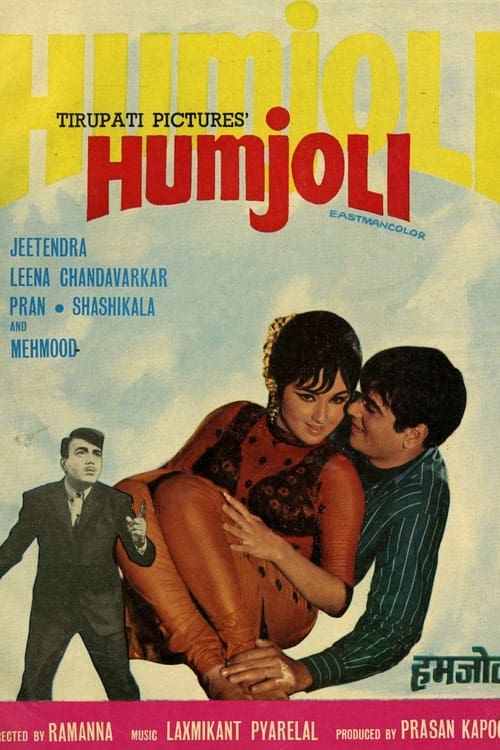
Humjoli
Plot
A man, after marrying an heiress, plots his wife's murder and deserts his daughter, only to be shocked when his estranged daughter returns home years later.
Get the Weekly Woke Watchlist
New and trending movies scored for woke bias, preachy messaging, and forced political themes — before you waste your evening.
No spam. One useful email per week.
Overall Series Review
Categorical Breakdown
The inciting incident of the plot is a character being rejected for marriage due to having dark skin, explicitly introducing a conflict based on an immutable physical characteristic. However, the narrative does not expand this into a critique of systemic oppression or feature forced diversity, as the resolution hinges on the hero's merit and the villain's personal greed, not a political lecture. All primary characters are from the same cultural and ethnic background.
The narrative operates entirely within the moral and cultural framework of Indian society, celebrating traditional family bonds and institutions. The main conflict stems from the individual villain's greed and immorality, not any critique of the home culture or its ancestors. The ending sees the triumph of justice and the restoration of a stable family unit, validating cultural foundations.
The female lead is portrayed as intelligent and working as a personal secretary after college. Women are not presented as flawless "Girl Bosses" whose perfection highlights male incompetence. The story features complex female characters: one as a victim, another as a villainous accomplice, and the heroine as a loving partner. The eventual happy ending is a traditional romantic union, and motherhood, though tragic in the backstory, is a celebrated familial value.
The story is a classical romantic drama focused exclusively on the standard male-female pairing and the formation of a nuclear family. There is no presence of centering alternative sexualities, deconstructing the family unit, or promoting gender ideology. The structure remains entirely normative.
The movie follows a clear objective moral code where crime (greed, betrayal, attempted murder) is evil, and truth and love are good. The resolution involves the villain confessing and surrendering to the police, reinforcing a transcendent moral law and accountability. Religion is present as a setting in the background (a trip to a temple is planned before the attack) but is neither demonized nor used as a source of bigotry.
Get the Weekly Woke Watchlist
New and trending movies scored for woke bias, preachy messaging, and forced political themes — before you waste your evening.
No spam. One useful email per week.