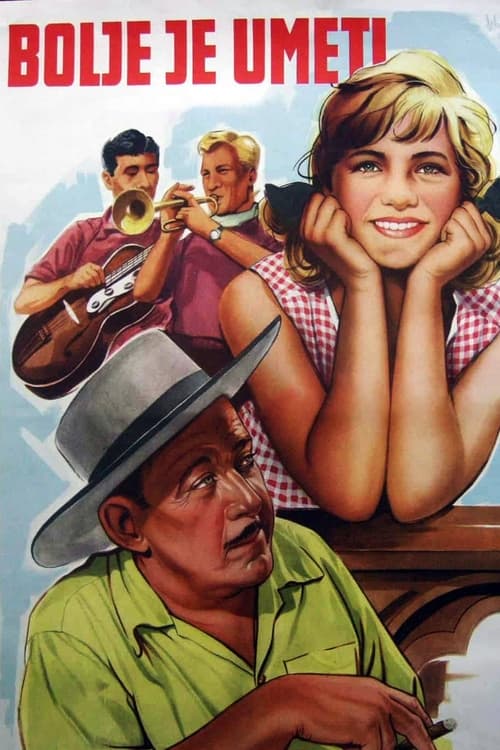
It Is Better to Know How
Plot
Mane Karakas comes to a small coastal town to dig a hole for watering system. He tries to brighten up the town's sleepy atmosphere. The local journalist who misunderstood Karakas writes an article about new popular melody festival in town. When it was about time for the contract to be signed, Mane explains it is all a big misunderstanding, but singers and orchestras already arrived. Music is everywhere, but Mane goes elsewhere to look for the oil.
Get the Weekly Woke Watchlist
New and trending movies scored for woke bias, preachy messaging, and forced political themes — before you waste your evening.
No spam. One useful email per week.
Overall Series Review
Categorical Breakdown
Characters are defined by their roles—the pragmatic engineer, the mistaken journalist, the local citizens, and the arriving musicians. The narrative centers on a comedy of errors regarding a contract for a watering system or oil, which are universal economic and community issues. There is no focus on race, intersectional hierarchy, or the vilification of any immutable characteristic. The premise operates on a meritocratic/role-based structure.
The film criticizes the town's initial 'sleepy atmosphere,' but the protagonist's goal is to bring a positive change: a watering system, oil, or a music festival. This is constructive, internal criticism aimed at improving local vitality and development, which aligns with Chesterton’s Fence. The core institutions and local culture are not framed as fundamentally corrupt or racist; they are merely lethargic and easily confused.
As a 1960s comedy, the film's gender dynamics are traditional, and the plot is not centered on a gender-based conflict. There is no indication of 'Girl Boss' tropes, the emasculation of males, or anti-natalist messaging. The story focuses on the male lead's professional mix-up. Roles are distinct and complementary within the cultural context of the era, reflecting a focus on normative structure rather than a modern feminist agenda.
The plot is a simple misunderstanding about a well/oil digging project versus a music festival. There is no presence of alternative sexual ideologies, centering of non-traditional sexual identities, or deconstruction of the nuclear family. The film adheres to a normative structure, with sexuality being private and irrelevant to the main comedic plot.
The core story is about infrastructure, a journalist's error, and a music festival. Religion, faith, morality, and objective truth are entirely absent from the plot's conflict. Traditional religion is neither a source of strength nor a root of evil. The film operates in a secular space concerning a community's economic and cultural life.
Get the Weekly Woke Watchlist
New and trending movies scored for woke bias, preachy messaging, and forced political themes — before you waste your evening.
No spam. One useful email per week.