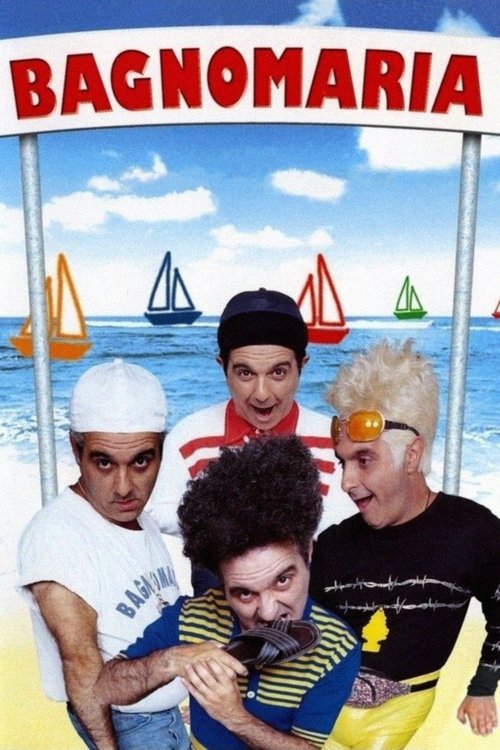
Bagnomaria
Plot
In Pietrasanta all are excited for the annual party of summer end. Here we find four characters: Merigo, a naive guy passionate of bike; Pierre, son of the mayor; Simone, a pestiferous kid; Mario, lifeguard of "Bagnomaria".
Get the Weekly Woke Watchlist
New and trending movies scored for woke bias, preachy messaging, and forced political themes — before you waste your evening.
No spam. One useful email per week.
Overall Series Review
Categorical Breakdown
The film’s central cast and supporting players are culturally homogeneous, fitting the regional Italian setting without political comment. Casting is entirely authentic to the locale. The humor is based on universal character flaws like laziness and naiveté, not on intersectional privilege or the vilification of any identity group.
The movie is a celebration of its Italian regional setting (Tuscany) and the local characters and customs. It uses the specific culture, dialect, and setting as the source of its humor and charm. Institutions like the local government and family are portrayed as functional, protective structures, not fundamentally corrupt or racist.
Female characters are secondary to the male-driven character comedy. They are generally portrayed in traditional, complementary roles such as love interests, wives, or community members. The plot is not focused on emasculating men or promoting the 'Girl Boss' trope; the conflict between the son and the mayor is purely about responsibility and generational difference, not gender dynamics.
The film features a normative structure centered on traditional male-female pairings and community life. There is no presence of 'queer theory,' discussion of alternative sexualities, or a critique of the nuclear family. Sexuality is not a theme or the most important trait for any character.
Religious figures, such as a local priest and a nun, are included naturally as part of the community’s social fabric. Their presence is a reflection of the Italian culture. There is no hostility toward religion or suggestion that faith is the root of evil. The narrative operates on a basis of practical morality and local social rules.
Get the Weekly Woke Watchlist
New and trending movies scored for woke bias, preachy messaging, and forced political themes — before you waste your evening.
No spam. One useful email per week.