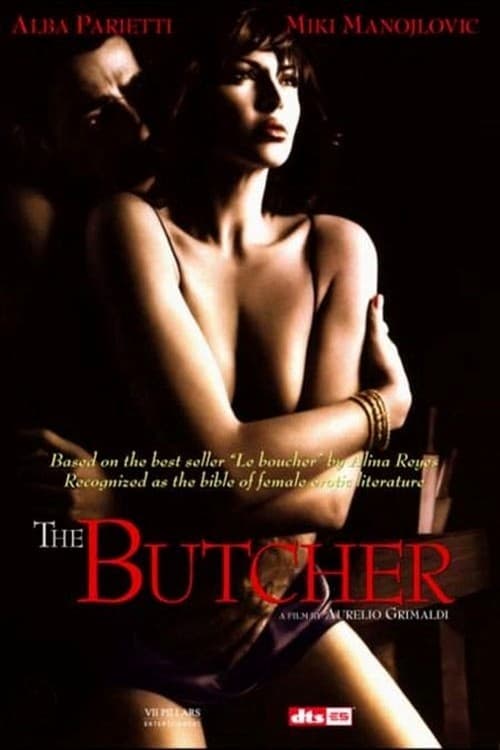
The Butcher
Plot
Alina is a brilliant and enterprising woman who runs a successful art gallery in Palermo. Her husband Daniele, a successful orchestra conductor, cultured and intelligent, is not a regular presence. One day, while accompanying Daniele to the airport, Alina feels a sense of emptiness. She will try to fill it with a butcher who is always joking and full of erotic allusions and who arouses a strong attraction in her.
Get the Weekly Woke Watchlist
New and trending movies scored for woke bias, preachy messaging, and forced political themes — before you waste your evening.
No spam. One useful email per week.
Overall Series Review
Categorical Breakdown
The drama is strictly focused on marital infidelity and class difference in a European setting. The conflict between the cultured elite (conductor) and the primal working class (butcher) is one of status and vitality, not race or intersectional hierarchy. Character merit is superseded by primal, non-rational attraction.
The narrative critiques the 'carefully constructed life' of the elite, cultured society, portraying the established institution of the wealthy, artistic marriage as emotionally sterile and unfulfilling. This frames a significant part of the 'home' culture as corrupt and empty, favoring the 'raw' vitality of the working-class outsider. It is a deconstruction of bourgeois convention.
The female lead, Alina, is a high-status, 'brilliant and enterprising' woman who finds her true, primal fulfillment outside the confines of her successful but emotionally unsatisfying marriage. Her husband is framed as distant, lacking the masculine vitality she seeks. The narrative celebrates the woman's self-fulfillment through an explicitly anti-family, anti-marital act, portraying motherhood (the couple is seeking to adopt) and marriage as secondary to career and personal, sexual liberation.
The narrative is entirely focused on a heterosexual affair and the internal collapse of a male-female marriage. There is no presence of alternative sexual ideologies, centering of LGBTQ+ themes, or messaging on gender identity theory.
The film is fundamentally secular, focusing exclusively on primal human desire and instinct as the driving forces of the plot. It avoids moral judgment, presenting a morally relativistic view where desire justifies the action. Traditional faith is absent from the conflict, creating a spiritual vacuum, but the film does not actively vilify religion.
Get the Weekly Woke Watchlist
New and trending movies scored for woke bias, preachy messaging, and forced political themes — before you waste your evening.
No spam. One useful email per week.