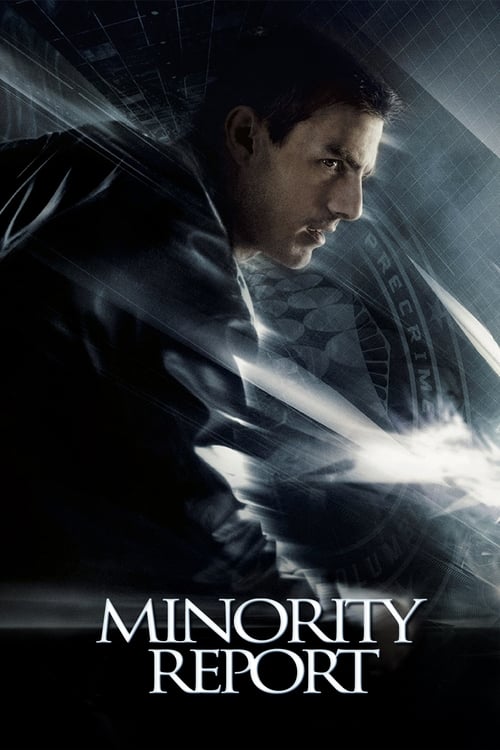
Minority Report
Plot
John Anderton is a top 'Precrime' cop in the late-21st century, when technology can predict crimes before they're committed. But Anderton becomes the quarry when another investigator targets him for a murder charge.
Get the Weekly Woke Watchlist
New and trending movies scored for woke bias, preachy messaging, and forced political themes — before you waste your evening.
No spam. One useful email per week.
Overall Series Review
Categorical Breakdown
Characters are defined entirely by their professional roles, personal tragedy, and moral choices within the system. The protagonist’s journey is driven by his lost son and his determination to prove his innocence based on individual action and free will. Character merit and moral content are the sole drivers of the plot, not immutable characteristics or intersectional concerns. Casting appears colorblind for secondary roles, and the main conflict is not presented as a lecture on privilege or systemic oppression based on race.
The film critiques the ethical failures of a specific future American institution, the Precrime policing unit, and its abuse of technology, not the fundamental values or heritage of Western civilization itself. The narrative's goal is to dismantle a corrupt, authoritarian surveillance program and restore due process and justice. The system's collapse leads to a greater sense of freedom and the triumph of the individual's choice, which is a restoration of a core Western ideal, not a celebration of civilizational collapse.
The main female characters, Agatha the Precog and Lara Anderton, serve complementary roles to the male protagonist's arc. Agatha is a mystical oracle and passive victim who provides crucial information. Lara is defined as the wife and mother who helps uncover the conspiracy and provides a path for the protagonist's family to reunite. The film's resolution sees the couple reuniting and expecting a second child, actively celebrating a return to the nuclear family unit and a positive view of motherhood.
The story adheres to a normative structure where the traditional heterosexual relationship and the nuclear family are the central emotional and motivational anchors for the protagonist. There is no presence of alternative sexual ideologies, centering of non-traditional sexualities, or deconstruction of the male-female pair. Sexuality is not a topic of discussion or a defining trait for any character.
The movie uses religious language like 'miracle,' 'halo,' and 'The Temple' to describe the secular Precrime system, suggesting a critique of deifying technology and abandoning moral truth. The villain is a respected figure who corrupts the system, reinforcing the idea that moral failure is an individual's choice, not the fault of faith. The entire plot revolves around proving that Objective Truth and free will exist, directly contradicting moral relativism and affirming a higher moral law against false justice.
Get the Weekly Woke Watchlist
New and trending movies scored for woke bias, preachy messaging, and forced political themes — before you waste your evening.
No spam. One useful email per week.