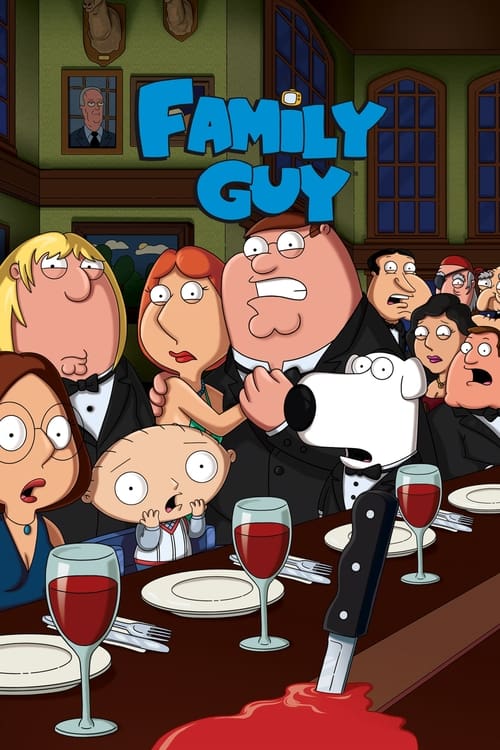
Family Guy
Season 10 Analysis
Season Overview
No specific overview for this season.
Season Review
Categorical Breakdown
The narrative makes race a central theme in multiple episodes, notably "Baby Got Black" where the plot revolves around Chris dating a Black girl and Peter's overt racism, and the show attempts a commentary on 'white privilege' which is undercut by the surrounding jokes. The episode "Turban Cowboy" features a controversial gag where a cab driver uses a card that ranks darker skin tones as 'not okay,' directly satirizing/utilizing racial hierarchy. While the satire is broad and targets all groups, the vilification of Peter's 'whiteness' as the source of bigotry and incompetence is a recurrent feature.
The hostility toward American institutions and the Western home is explicit. In one plot, Peter joins the Tea Party and successfully campaigns to shut down the government, which immediately leads to civic chaos and societal breakdown, framing anti-establishment American political movements as dangerously destructive. The family unit itself is consistently portrayed as corrupt, abusive, and an overall negative institution. A conflict with the traditionalist Amish culture is framed with the Griffins' modern life as crass and violent.
The core dynamic sees all male leads (Peter, Quagmire, Joe) portrayed as incompetent, toxic, or bumbling idiots, fulfilling the trope of male emasculation. However, female characters are not consistently framed as "Girl Bosses." Lois is often more rational than Peter, but a subplot portrays the wives as childish when the men leave them. The controversial episode "Seahorse Seashell Party" centers on Meg finally confronting her abusive family but concludes with a voice-over suggesting her staying is a 'noble' choice, which is a strong counter-signal to the anti-natalism/anti-family message, keeping the score moderate.
The season contains only the typical, long-running satirical elements related to Stewie's 'Ambiguously Gay' persona, which does not constitute a centering of alternative sexualities or a political lecture on gender theory. There are no major plots dedicated to deconstructing the nuclear family as 'oppressive' through the lens of queer theory, and the content is consistent with the show's general irreverent satire rather than ideological alignment.
The episode "Livin' on a Prayer" strongly vilifies traditional religion by centering a plot where religious parents refuse modern medical treatment for their sick child, leading Lois to intervene by kidnapping the child to save him. The moral resolution fully endorses the secular, medical choice and frames the parents' faith as dangerous ignorance and the direct cause of suffering, aligning with the idea that traditional religion is a threat.