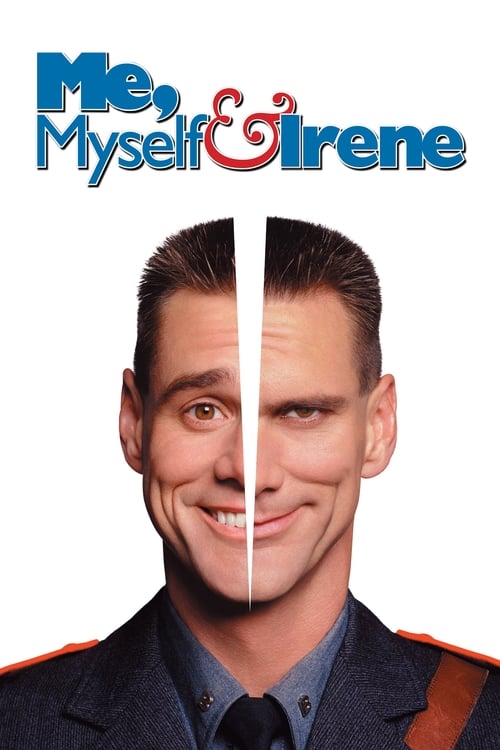
Me, Myself & Irene
Plot
Rhode Island State Trooper Charlie Baileygates has a multiple personality disorder. One personality is crazy and aggressive, while the other is more friendly and laid back. Both of these personalities fall in love with the same woman named Irene after Charlie loses his medication.
Get the Weekly Woke Watchlist
New and trending movies scored for woke bias, preachy messaging, and forced political themes — before you waste your evening.
No spam. One useful email per week.
Overall Series Review
Categorical Breakdown
Characters are not judged by intersectional hierarchy, but race is used explicitly as a constant source of comic material. The white male protagonist (Charlie) is initially vilified by his community for being a passive 'doormat,' and his Black sons, who are high-IQ geniuses, are a part of the central running joke on stereotype subversion. The narrative is anti-woke by championing a white male's universal love for his non-biological children and making the 'nice' white male's failure the main catalyst for the plot's conflict.
The narrative does not frame Western culture or the American setting as fundamentally corrupt or racist. The protagonist is a Rhode Island State Trooper, a figure of local authority. The conflict is initiated by individual corruption (bad cops) and personal trauma, not systemic failures. The film validates the protective role of institutions like the family unit, as Charlie’s dedication to his unconventional family is a source of virtue and loyalty for his sons.
The female lead (Irene) is not a 'Girl Boss' or a 'Mary Sue'; her character exists mainly as a foil and love interest to the male protagonist's split personalities. The initial trauma in the plot involves Charlie's wife abandoning her traditional family role through infidelity, which is depicted as a negative, destructive act. The film's conclusion suggests that a tough, protective male presence is necessary for security, running counter to anti-masculine narratives.
The core romance is a traditional male-female pairing. The primary family unit is a father and his three sons. There is no focus on alternative sexualities, deconstruction of the nuclear family as an oppressive structure, or inclusion of gender ideology. Sexuality remains a private, heterosexual matter, albeit a crude source of humor for the alter-ego, Hank.
The plot contains no explicit references to traditional religion or anti-Christian themes. The central moral conflict is psychological: the battle between extreme politeness and necessary aggression. Morality is framed pragmatically through personality integration rather than subjective power dynamics, and the story acknowledges no higher moral or spiritual law to celebrate or attack.
Get the Weekly Woke Watchlist
New and trending movies scored for woke bias, preachy messaging, and forced political themes — before you waste your evening.
No spam. One useful email per week.