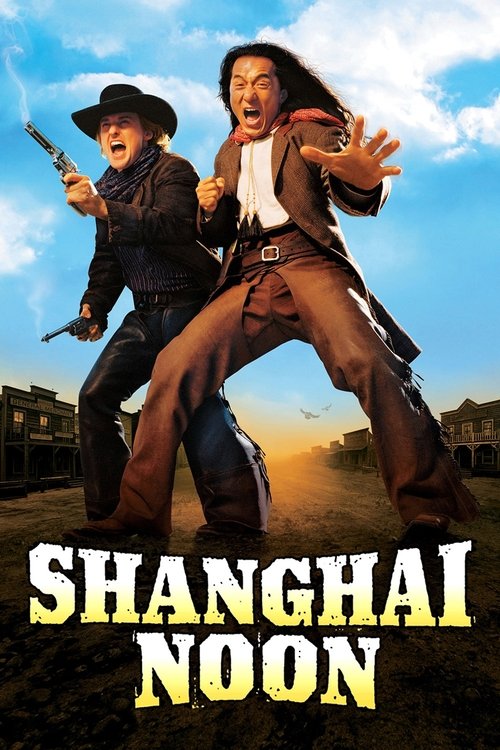
Shanghai Noon
Plot
Chon Wang, a clumsy imperial guard, trails Princess Pei Pei when she's kidnapped from the Forbidden City and transported to America. Wang follows her captors to Nevada, where he teams up with an unlikely partner, outcast outlaw Roy O'Bannon, and tries to spring the princess from her imprisonment.
Get the Weekly Woke Watchlist
New and trending movies scored for woke bias, preachy messaging, and forced political themes — before you waste your evening.
No spam. One useful email per week.
Overall Series Review
Categorical Breakdown
The lead hero is a Chinese Imperial Guard, not a white male, which immediately subverts the genre's racial tradition. The plot focuses on the plight of Chinese indentured servants and features an Asian man saving an Asian princess from a Chinese traitor. The white male protagonist, Roy O'Bannon, is a bumbling outlaw who is constantly overshadowed in competence and morality by the Chinese hero, fitting the vilification/incompetence measure for the 'whiteness' category. The narrative gives focus to the racial group struggle of the Chinese immigrants.
Princess Pei-Pei resents her home culture in the Forbidden City, which is framed as oppressive, hierarchical, and without freedom of choice. She actively rejects her family's tradition and arranged marriage to pursue an individualistic life of social action in the United States, which is framed as a land of free will and opportunity. This suggests a deconstruction of Chinese heritage and a positive valuation of the American ideal, though the American male co-star is a flawed criminal. A Native American character is also portrayed as a 'Noble Savage' archetype, silent and spiritually/physically superior to the white outlaw.
The movie features two strong female characters who are highly competent. Princess Pei-Pei is not a passive damsel but a self-determined woman who rejects her expected life and plans to become a social worker or union organizer. The Native American character, Falling Leaves, is a 'Man with No Name' figure who is consistently braver and more capable than the two male leads, saving them multiple times. This portrayal positions the female leads as instantly superior to the bumbling male characters.
The narrative adheres to a normative structure without centering on alternative sexualities or gender ideology. Sexual content is limited to crude humor, brothels, and a heterosexual accidental marriage, which are common tropes of the Western genre but do not involve political lecturing or a focus on non-traditional sexual identities.
The film's morality is largely secular and based on individual honor, duty, and friendship. The setting of the Wild West features casual vice, including brothels, drinking, and drug humor from a peace pipe. The plot does not feature any explicit hostility toward Christianity or organized religion, but it also does not invoke a transcendent moral law or faith as a source of strength, operating instead within a morally ambiguous, amoral Western framework.
Get the Weekly Woke Watchlist
New and trending movies scored for woke bias, preachy messaging, and forced political themes — before you waste your evening.
No spam. One useful email per week.