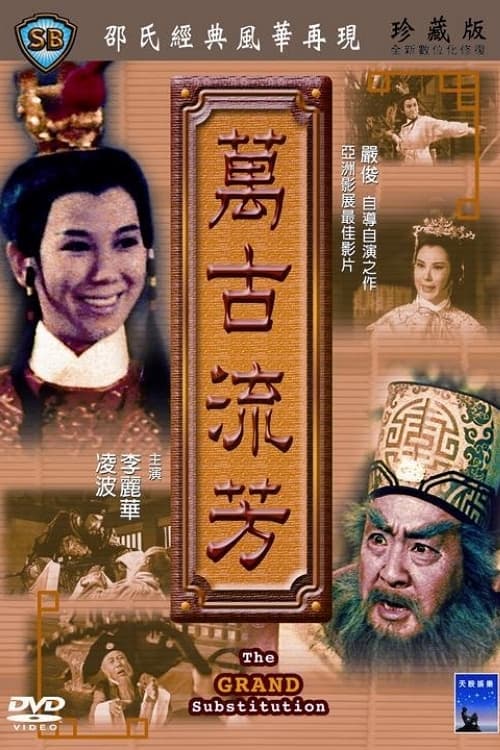
The Grand Substitution
Plot
With China under control of a weak Emperor, two officials compete to steer the future destiny of the land. Chiu believes the people are the future of China, while the diabolical Tu wishes to grind the people beneath an iron heel. Tu decides to take out Chiu's family, but one lone infant escapes.
Get the Weekly Woke Watchlist
New and trending movies scored for woke bias, preachy messaging, and forced political themes — before you waste your evening.
No spam. One useful email per week.
Overall Series Review
Categorical Breakdown
The plot is entirely focused on a power struggle between two political officials and the preservation of a righteous bloodline. Characters are judged solely by their loyalty, honor, and evil intent, not by race or immutable characteristics. Meritocracy and moral character are the only defining traits.
The movie is a powerful affirmation of traditional Chinese civilization, celebrating the highest ancestral values of loyalty (to the family and the state), self-sacrifice, and Confucian righteousness. The institutions of the court, the family, and the moral order are shown as forces of good being defended against chaos (the villain Tu).
The core story is male-centric, focusing on the male heir and the loyal male retainers who sacrifice for him. The mother's role is highly traditional and sacrificial, as she takes her own life to protect the secret of the substitution. The narrative is centered on preserving the patriarchal family lineage, viewing motherhood and lineage as vital, not as a prison. This adheres to complementarian roles.
The narrative's central motivation is the preservation of the family lineage and the nuclear structure of the dynastic family. The story operates within a completely normative structure with no exploration or centering of alternative sexualities or gender theory.
The conflict is defined by objective moral truth, pitting transcendent virtues like loyalty and justice against the villain's pure wickedness. The film draws directly from the framework of Confucian moral law and Chinese values, which are presented as the source of strength and righteousness. There is no critique of religious or spiritual beliefs, particularly no anti-Christian themes.
Get the Weekly Woke Watchlist
New and trending movies scored for woke bias, preachy messaging, and forced political themes — before you waste your evening.
No spam. One useful email per week.