Raw
Season 1 Analysis
Season Overview
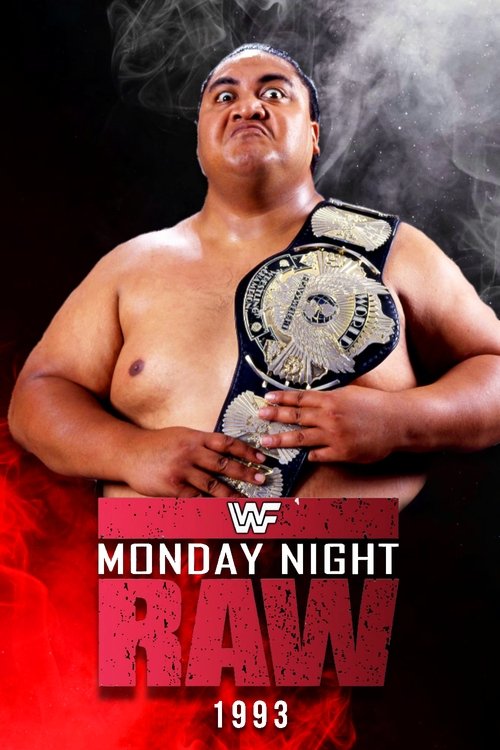
This is the year that started a sports-entertainment phenomenon. Don't miss Monday Night Raw's inaugural season, featuring classic rivalries like Razor Ramon vs. 1-2-3 Kid, Bret Hart vs. Jerry Lawler, and more.
Season Review
Categorical Breakdown
Characters are defined by occupational or nationalistic caricatures and bombastic gimmicks, not by intersectional characteristics or systemic oppression. Conflict is explicitly framed as hero vs. villain based on action and personality. The show celebrates the underdog's merit and perseverance, as demonstrated by the 1-2-3 Kid's upset victory over Razor Ramon, which launched his career. There is no vilification of 'whiteness' or forced diversity lecture.
The narrative frequently features expressions of American patriotism, particularly in the presentation of heroic characters like Lex Luger. The show’s themes often position American or Western concepts of honor and heroism against foreign antagonists, such as Yokozuna, framing institutions like the nation as a clear positive force. The underlying message is one of national pride against foreign or anti-social threats, not civilizational self-hatred.
The show is dominated by male characters whose masculinity is protective, competitive, or villainous, but never framed as inherently toxic. Female characters are extremely rare and function primarily as managers or valets; they are not positioned as 'Girl Boss' leads, nor are males emasculated to elevate them. Motherhood and career dynamics are completely absent from the narrative focus.
The core structure is normative, focused entirely on the traditional male-female pairing as the unstated standard for society, though sexuality is largely private and not a factor in the plot. Alternative sexualities or gender ideology are entirely absent from the presentation, as is any deconstruction of the nuclear family.
Religious themes are minimal, usually confined to specific character gimmicks like The Undertaker's supernatural lore or the brief appearance of a silly character like Friar Ferguson. The morality of the show is clearly objective, separating characters into 'good' (faces) and 'evil' (heels), and there is no messaging that frames traditional religion as the root of evil.