Raw
Season 16 Analysis
Season Overview
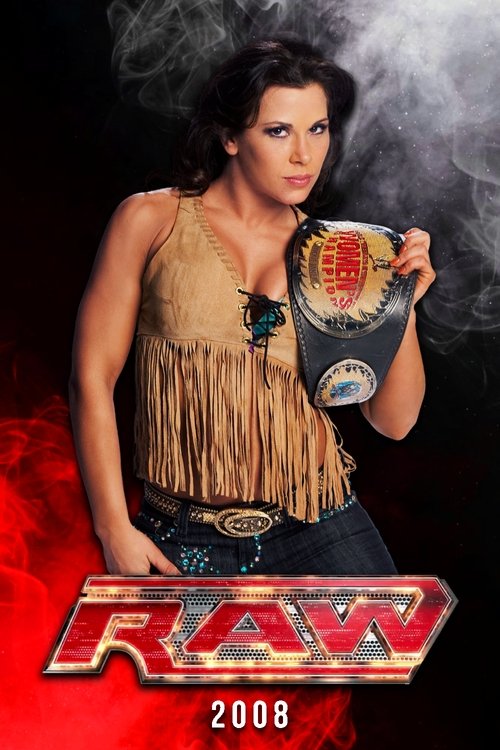
Raw's 2008 marks the end the most legendary career in sports-entertainment history as Ric Flair says goodbye to the WWE Universe. Plus, Mr. McMahon gives away millions, Randy Orton crafts his legacy, and more.
Season Review
Categorical Breakdown
The narrative structure pits individual heroes against villains, primarily focusing on power, money, and personal rivalry without any commentary on race or privilege. Conflicts are based on merit, not intersectional identity. The closest the program comes to identity politics is using classic, non-woke tropes such as the 'evil foreigner' or the 'rich snob' against the 'working-class hero,' which judges a character by their gimmick/actions rather than immutable characteristics or systemic critique.
The program is fundamentally an Americanized spectacle, celebrating themes of ambition, individual success, and athletic glory, which is the direct opposite of civilizational self-hatred. Institutional figures, such as Ric Flair, are revered and their legacies celebrated. There is no deconstruction of Western heritage or framing of the home culture as fundamentally corrupt.
The female performers are branded as 'Divas,' a term that places them as sex symbols and secondary to the male 'Superstars.' Their matches and character portrayals are highly sexualized and focused on traditional, exaggerated femininity, including 'cat-fight' tropes. This period is squarely in the territory of objectification, which is the antithesis of the 'Girl Boss' or anti-natalist feminist messaging.
The season contains no discernible messaging from the queer theory lens. Alternative sexualities or gender ideology are not centered or celebrated as key plot points. The program features no lecturing on gender theory. The presence of the comedic 'Santina Marella' drag gimmick, where a male wrestler parodied an overly emotional female character, is an example of humor that actively satirizes gender fluidity and would be considered extremely non-woke by modern standards.
Religion is absent from the core storylines, with no characters or plots dedicated to either faith or its critique. The program operates in a world of individual good and evil, with morality defined by a simple code of honesty, sportsmanship, and ambition, not by a critique of religious institutions. There is no hostility shown toward traditional religion.