Raw
Season 30 Analysis
Season Overview
2022 season of WWE Raw
Season Review
Categorical Breakdown
The championship reign of Bianca Belair, an African American woman, is heavily promoted by highlighting her exceptional athletic merit and her moniker, 'The EST of WWE.' Her story emphasizes overcoming setbacks to achieve greatness rather than dwelling on systemic oppression or victim narratives. There is no plot dedicated to lecturing on privilege or vilifying characters based on immutable characteristics; conflicts are driven by ambition and professional jealousy.
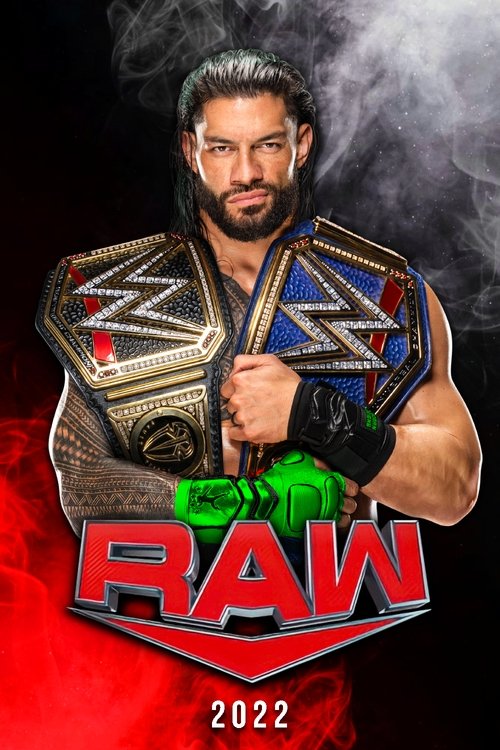
The narrative does not include themes of civilizational self-hatred. Ancestors, national identity, and cultural institutions are not demonized or deconstructed; they are generally either ignored or used as a source of pride for specific characters (e.g., Roman Reigns' family lineage). The conflict is contained within the universe of professional wrestling and its pursuit of championships.
The women’s division is prominently featured, with top female characters like Bianca Belair and Becky Lynch presented as highly successful and dominant competitors. This leans toward the 'Girl Boss' archetype by emphasizing individual career fulfillment and physical perfection. However, no male characters are systematically emasculated by female opponents, and there are no explicit anti-family or anti-natalist messages woven into the core rivalries.
The show does not center its primary storylines on alternative sexualities or gender ideology. While Sonya Deville, an openly gay wrestler, is prominently featured for part of the season as an on-screen authority figure and competitor, her narrative is driven by power and wrestling goals, not her sexual identity. The traditional male-female pairing remains the normative structure for romantic or family-based storylines.
Religion is absent from the core narrative of Season 30. There is no hostility directed toward Christianity or any other traditional religion. Moral conflicts are framed in terms of loyalty, cheating, and sporting justice, acknowledging an objective moral law within the context of competition (the rules of the ring) rather than subjective 'power dynamics.'