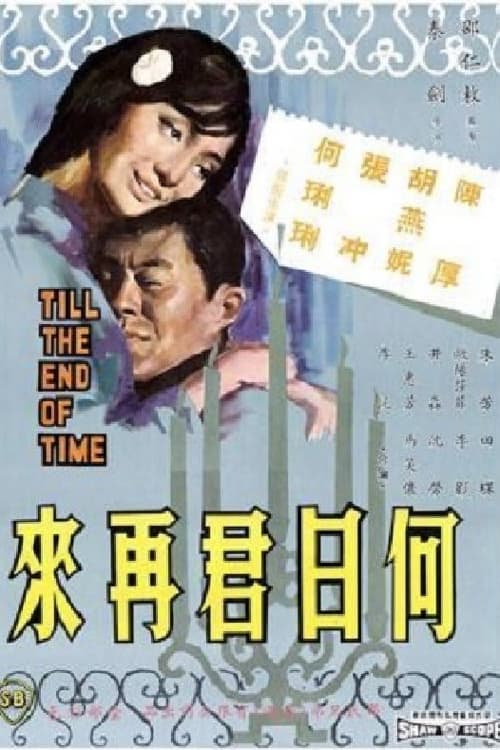
Till the End of Time
Plot
Jenny Wu is a singer who charms the well-to-do Peter Chen, but his parents object to a union between their only son and a lowly cabaret singer. He ignores their advice and marries her anyway, and for a time, they find some manner of wedded bliss. But the years are not entirely kind. He works hard to make ends meet, but his health pays the price.
Get the Weekly Woke Watchlist
New and trending movies scored for woke bias, preachy messaging, and forced political themes — before you waste your evening.
No spam. One useful email per week.
Overall Series Review
Categorical Breakdown
The film’s central conflict is a traditional class-based disagreement between the wealthy Chen family and the 'lowly' cabaret singer Jenny Wu, which is resolved by the couple's personal devotion. The characters' struggles are based on social status and economic reality, not immutable characteristics, intersectional hierarchy, or the vilification of any ethnic group. The casting reflects the Hong Kong setting of the film.
The film is a product of Hong Kong's Shaw Brothers studio, focusing on an internal social drama within that cultural context. The movie is described as a 'lovely little time capsule' with a 'lack of cynicism' about its setting and values. There is no element of hostility toward Western civilization, its home culture, or ancestors; rather, the plot acknowledges and navigates local traditional family structures and expectations.
The female lead, Jenny Wu, is a professional singer who must return to work to provide for her husband after his health fails. This demonstrates her strength and resourcefulness, but the action is framed as a selfless act of support for her husband and their marriage, not as a rejection of the domestic sphere or emasculation of the male lead. Peter Chen is depicted as a man who worked himself into illness trying to provide for his family. The gender roles are distinct but complementary, ultimately celebrating the couple's loyalty to their commitment.
The entire narrative is a straightforward, melodramatic heterosexual romance that centers on the traditional institution of marriage and the challenges of a nuclear family unit. There is no presence of alternative sexualities, deconstruction of the nuclear family, or any commentary on modern sexual or gender ideology.
The film is a social and romantic melodrama. The plot's tension is derived from class conflict and personal misfortune. There are no mentions or depictions of religious faith, Christianity, or any moral framework that would suggest anti-theistic sentiment or the promotion of moral relativism.
Get the Weekly Woke Watchlist
New and trending movies scored for woke bias, preachy messaging, and forced political themes — before you waste your evening.
No spam. One useful email per week.