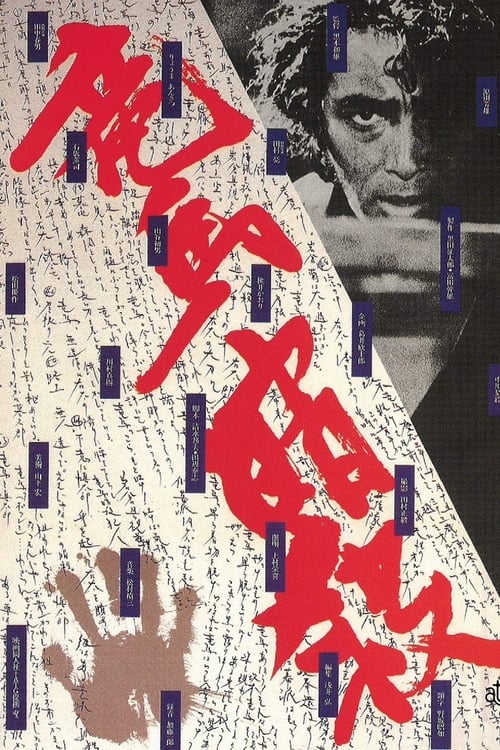
The Assassination of Ryoma
Plot
Story of the last three days in the life of Sakamoto Ryoma (1836-1867), the imperial loyalist who tried to unite the Choshu and Satsuma clans and prepared the way for the Meiji Restoration (1868).
Get the Weekly Woke Watchlist
New and trending movies scored for woke bias, preachy messaging, and forced political themes — before you waste your evening.
No spam. One useful email per week.
Overall Series Review
Categorical Breakdown
The film’s central conflict critiques the feudalistic Japanese caste system, as the main character, a low-level samurai, is shown to resent the arrogance of the higher-ranking samurai. He is depicted as trying to move past the caste prejudices of the era. The conflict is internal to Japanese society and based on social class/caste, not on race, 'whiteness' vilification, or modern intersectional theory.
The film aggressively deconstructs the legacy of a national hero and mocks traditional samurai institutions and history. The narrative includes scenes, like a botched, graphic seppuku, framed to show the brutality and 'insanity' of the traditional practice. The overall tone is 'blasphemous' and anti-genre, openly criticizing feudal Japanese culture as corrupt and outdated in its pursuit of a 'modern society.'
Gender dynamics are crude and exploitative, with the main male lead, Ryoma, being highly focused on lust and crudely fondling a woman early in the film. However, the female characters are not presented as 'Mary Sue' or 'Girl Boss' archetypes. The focus is on the male hero's base humanity and confusion rather than on a lecture about patriarchy or promoting anti-natalist messages. The depiction of sex is transactional and raw, a product of 1970s New Wave sensibilities, not a vehicle for modern feminist ideology.
The narrative adheres to a normative structure, focusing on heterosexual relationships, however crude. There is no presence of alternative sexual ideologies, deconstruction of the nuclear family (which is not a significant element), or any commentary on modern gender theory. Sexuality, though explicit in its crudeness, remains private and unpoliticized in the sense of the queer theory lens.
The film embraces a high degree of moral relativism by depicting the legendary hero as confused, flawed, and morally ambiguous. This moral vacuum stems from the collapse of the traditional samurai code and social order. However, the narrative does not specifically target or vilify traditional religion, especially Christianity, which is the focus of the scoring definition, keeping the score low.
Get the Weekly Woke Watchlist
New and trending movies scored for woke bias, preachy messaging, and forced political themes — before you waste your evening.
No spam. One useful email per week.