Wild Animals
Plot
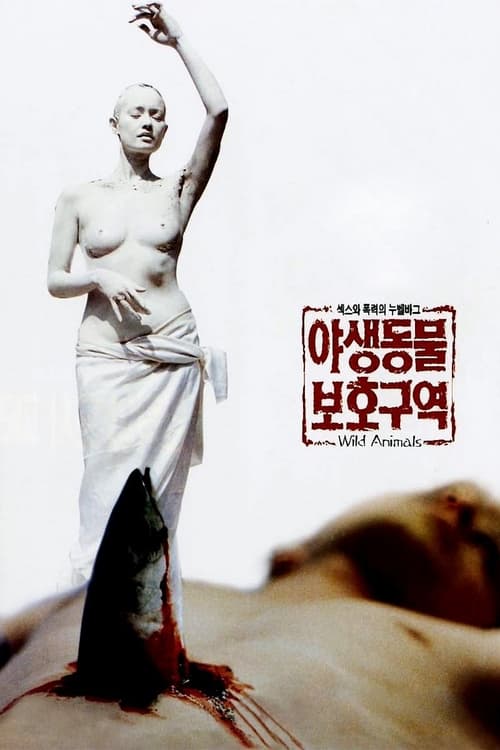
Two Korean ex-pats in Paris are recruited by a French mobster. The duo find themselves at war with their mobster recruiters and each other.
Get the Weekly Woke Watchlist
New and trending movies scored for woke bias, preachy messaging, and forced political themes — before you waste your evening.
No spam. One useful email per week.
Overall Series Review
Categorical Breakdown
The plot's entire setup rests on the difference between a North Korean former soldier and a South Korean petty criminal, who are also Korean ethnic expatriates. The North Korean character shows a flash of 'ethnic solidarity' to protect the South Korean from French victims he scammed, suggesting identity bonds override immediate situational justice. However, the film focuses more on their individual moral integrity (Hong-san is moral, Chong-hae is not) rather than on a systemic lecture about their marginalized status, thus preventing a high score.
The film does not directly demonize ancestors or home culture but presents the Western metropolis of Paris as a dark, amoral, and chaotic underworld of crime and prostitution that exploits immigrants. This deconstructs the romantic image of a Western cultural capital, showing the French characters as exploiters (the French mob boss, the exploiting boyfriend Emil) and placing the Korean characters in a desperate struggle. The setting is framed as fundamentally corrupting, reflecting a critical, but not absolute, self-hatred for the host culture.
Female characters are depicted as victims of exploitation. Laura, an adopted Korean, is a peepshow performer exploited by her French boyfriend Emil, while she desires a 'normal family life.' Corinne, a Hungarian illegal immigrant, is a nude street artist. The women are not 'Mary Sues'; they are vulnerable and exploited figures whose strength is in their endurance and desperation, rather than being instantly perfect or emasculating the men. The message is anti-exploitation, but it does not promote the 'career is the only fulfillment' or 'men are bumbling idiots' trope.
The narrative features normative male-female pairings and focuses on the struggles of immigrant life and underworld crime. There is no presence of alternative sexual ideologies, centering of non-traditional sexual identities, or deconstruction of the nuclear family concept as oppressive. The female character's desire is for a 'normal family life.'
The story is set in a brutal underworld and focuses entirely on secular issues of crime, desperation, and material survival. The narrative presents an overtly amoral world, especially through the character of Chong-hae and the criminal element, where morality is entirely subjective and driven by self-interest and power dynamics (who can exploit whom). There is no explicit attack on Christianity, but the pervasive spiritual vacuum and moral relativism inherent in the crime drama genre justify a medium-high score for lacking any sense of Transcendent Morality or higher moral law.
Get the Weekly Woke Watchlist
New and trending movies scored for woke bias, preachy messaging, and forced political themes — before you waste your evening.
No spam. One useful email per week.