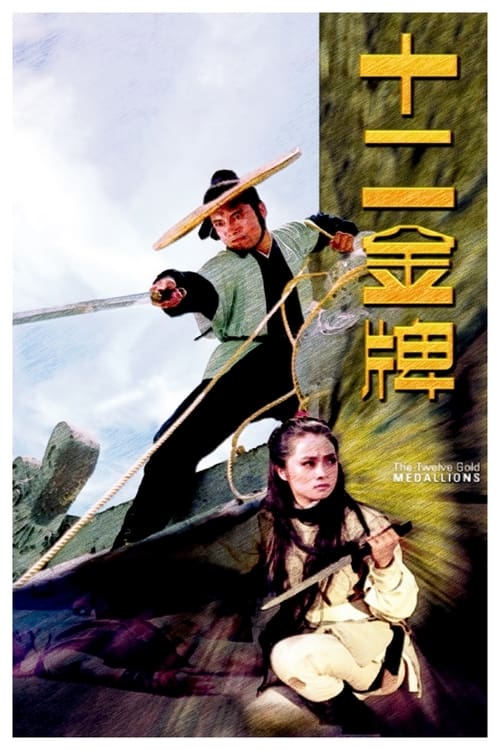
The Twelve Gold Medallions
Plot
While a brave Chinese general and his men fight against the Tartar invaders, several swordsmen try to obtain twelve golden medallions on whose possession depends the future of the Song dynasty.
Get the Weekly Woke Watchlist
New and trending movies scored for woke bias, preachy messaging, and forced political themes — before you waste your evening.
No spam. One useful email per week.
Overall Series Review
Categorical Breakdown
The central conflict is based on merit and moral choice, pitting patriotic heroes against traitors motivated by power and greed. The casting is historically and ethnically authentic to the Chinese setting, with no evidence of race-swapping or narrative focus on vilifying 'whiteness.' Character judgment is based on the content of their soul and their loyalty to the nation.
The plot is a direct celebration of national loyalty and defense of one's civilization, featuring heroes who fight to protect the Song Dynasty against both foreign Tartar invaders and internal corruption. The narrative frames the core national institutions and ancestral sacrifices (General Yueh Fei's campaign) as righteous and vital to defending the realm, which is the antithesis of civilizational self-hatred.
The female lead, Chin So, is a strong, competent martial artist who rebels against her traitorous father to join the heroic quest. This is a common, positive representation of a capable woman within the wuxia genre, but it does not lead to the emasculation of the main male hero, Miao Lung, who remains the central figure of immense skill. There is a traditional romantic subplot, and no anti-natal or anti-family messaging is present, though the father-daughter bond is broken by the father's treason.
The film operates within a completely normative structure for its time and genre. The romantic element centers on a traditional male-female pairing. There is no focus on alternative sexualities, no deconstruction of the nuclear family as an institution (beyond the specific criminal actions of one father), and no lecturing on gender ideology.
The moral framework is one of objective truth and righteousness, where 'good' is defending the dynasty and 'evil' is treason and collaboration with the enemy. The heroes are 'lawful warriors' and 'righteous masters' who fight for a higher moral cause. The narrative does not contain any hostility toward religion or embrace of moral relativism; instead, it underscores a clear, transcendent moral law of honor and loyalty.
Get the Weekly Woke Watchlist
New and trending movies scored for woke bias, preachy messaging, and forced political themes — before you waste your evening.
No spam. One useful email per week.