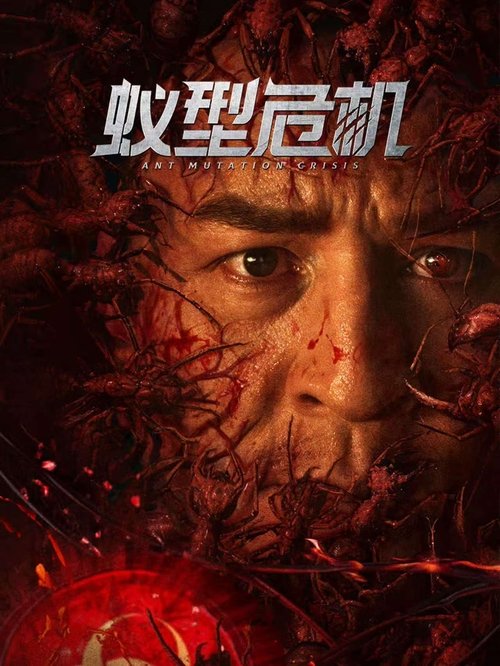
Ant Mutation Crisis
Plot
Biologist Hu Shuo, in a desperate attempt to save his son suffering from a genetic defect, conducts research on using ant DNA to enhance human genes. However, his controversial work is met with widespread rejection, and even his wife, Liu Xingzhi, leaves him. When Huang Jinxiong, a wealthy benefactor battling illness, funds Hu Shuo's research, a catastrophic accident occurs during his lab visit—the escaped queen ant mutates and leads a swarm of ants in a vicious attack. As the chaos unfolds, both Hu Shuo and Huang Jinxiong begin undergoing horrifying ant-like mutations...
Get the Weekly Woke Watchlist
New and trending movies scored for woke bias, preachy messaging, and forced political themes — before you waste your evening.
No spam. One useful email per week.
Overall Series Review
Categorical Breakdown
The film centers on Chinese characters, a scientist named Hu Shuo and a benefactor named Huang Jinxiong. The plot drives forward based on the characters' scientific merit, personal ambition, and familial motivation, not on any immutable characteristics. There is no focus on race or intersectional hierarchy and no vilification of 'whiteness' or forced diversity, as the cast is ethnically consistent with the production's cultural context.
The setting and characters are Chinese, and the conflict is internal to the characters' scientific hubris rather than a critique of any specific Western-defined civilization. The narrative is focused on a classic horror/sci-fi trope of a scientific experiment gone wrong. Core institutions like the family unit are present as the initial motivation for the scientist's work, and there is no display of hostility toward a home culture or ancestors.
The main female character, Liu Xingzhi, leaves her husband, Hu Shuo, due to his controversial and destructive work, which shows a woman making a choice that rejects the traditional expectation of unconditionally supporting the male lead’s all-consuming pursuit. This dynamic slightly elevates the score from a 1. The husband, Hu Shuo, is not depicted as a bumbling idiot, but as a dedicated, albeit tragically flawed, scientist, and masculinity is expressed through his protective drive for his son and subsequent self-sacrifice/transformation. The narrative does not focus on 'Girl Boss' tropes or explicit anti-natal messaging, but the wife's choice shows a separation from the nuclear family unit.
The narrative is centered entirely on a scientist's desperate attempt to cure his son's genetic defect and the resulting monster attack. The core relationship structure is the traditional male-female pairing (Hu Shuo and Liu Xingzhi) and the nuclear family unit (Hu Shuo's son). No elements of alternative sexualities, gender ideology, or deconstruction of the nuclear family are present in the central conflict or character motivations.
The film's focus is on the morality of science and the hubris of man (playing God) through a secular sci-fi lens. While there is no explicit anti-Christianity or anti-religion, the moral law is implicitly secular—the scientist is punished by a biological horror rather than divine judgment—suggesting a moral relativism based on consequences rather than transcendent truth. The film avoids religious themes but does not frame faith as a source of strength, placing all moral authority in the hands of the scientific/secular fallout.
Get the Weekly Woke Watchlist
New and trending movies scored for woke bias, preachy messaging, and forced political themes — before you waste your evening.
No spam. One useful email per week.