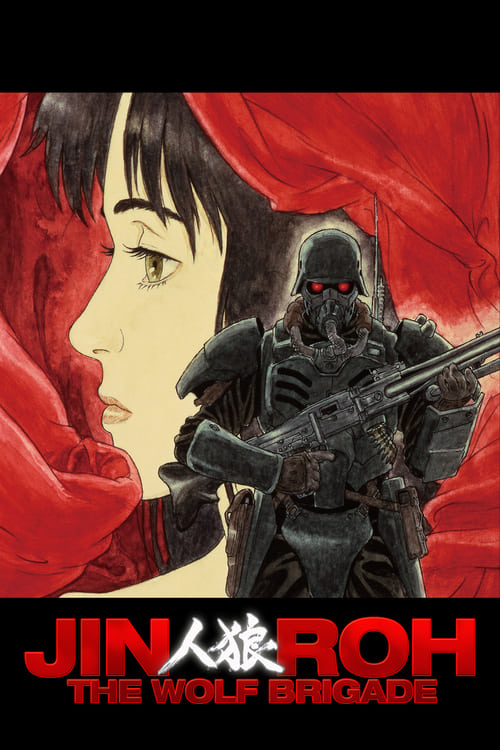
Jin-Roh: The Wolf Brigade
Plot
A member of an elite paramilitary counter-terrorism unit becomes traumatized after witnessing the suicide bombing of a young girl and is forced to undergo retraining. However, unbeknownst to him, he becomes a key player in a dispute between rival police divisions, as he finds himself increasingly involved with the sister of the girl he saw die.
Get the Weekly Woke Watchlist
New and trending movies scored for woke bias, preachy messaging, and forced political themes — before you waste your evening.
No spam. One useful email per week.
Overall Series Review
Categorical Breakdown
The central conflict is a political and institutional power struggle between two state security agencies and anti-government militants. Character merit is tied to operational capability and loyalty to one’s faction. All key characters are ethnically Japanese. The narrative avoids any reliance on race, intersectional hierarchy, or the vilification of immutable characteristics for its drama.
The setting is an alternate history Japan where the postwar government is a client regime of a denazified Germany. The film’s critical focus is directed squarely at the corruption, authoritarianism, and militarization of this specific fictional political state. The core critique is against totalitarian and oppressive systems of power, which is consistent with classic anti-authoritarian political thrillers and does not constitute civilizational self-hatred toward a broader, non-totalitarian 'home culture'.
The primary female character, Kei, is an operative and a sacrificial pawn in a cynical political maneuver orchestrated by men in rival government divisions. She is not a ‘Girl Boss’ nor is she portrayed as instantly perfect. Her role is defined by tragedy and her manipulation by a male-dominated state system, which is a key part of the movie’s thematic use of the 'Little Red Riding Hood' metaphor. The focus is on the male protagonist’s struggle with the loss of his humanity.
The narrative contains no themes, characters, or explicit dialogue related to LGBTQ+ ideology, alternative sexualities, or the deconstruction of the nuclear family. The relationship between the two main characters is a traditional male-female pairing, but it is ultimately a doomed romantic entanglement used as a political and archetypal weapon.
The movie operates primarily on a political and psychological level, using the man-vs-wolf metaphor to explore humanity and conscience. The moral crisis is entirely secular, centered on political obedience, violence, and the loss of individual moral agency to a larger organization. Traditional religion is neither present in the plot nor targeted for vilification.
Get the Weekly Woke Watchlist
New and trending movies scored for woke bias, preachy messaging, and forced political themes — before you waste your evening.
No spam. One useful email per week.