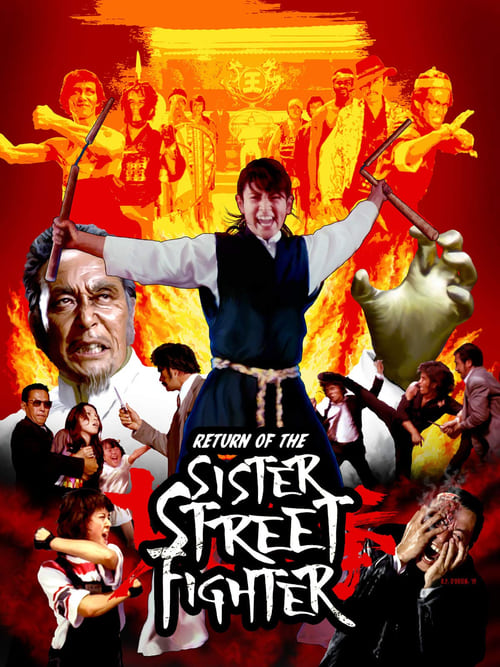
The Return of Sister Street Fighter
Plot
When Koryu's childhood friend Shurei is abducted by gangsters, the desperate young woman recruits a female martial artist and a tough-as-nails stranger to join her for a dangerous rescue mission.
Get the Weekly Woke Watchlist
New and trending movies scored for woke bias, preachy messaging, and forced political themes — before you waste your evening.
No spam. One useful email per week.
Overall Series Review
Categorical Breakdown
Identity is a key conflict, with the mixed-race protagonist facing prejudice, and the primary villain embodying the toxic legacy of Japanese militarism against Chinese people, centering an intra-Asian, historical conflict. The narrative does not focus on vilification of 'whiteness' or 'Western privilege,' but rather on Japanese historical criminality. The hero's merit is ultimately what defines her, but the racial/ethnic prejudice she faces is present.
The film’s critique is aimed specifically at the Japanese Yakuza underworld, organized crime, and the historical atrocities of Japanese militarism, which is an internal criticism of a corrupt element of its own culture. It is not a generalized hostility toward Western civilization, nor does it demonize the nation's core values, resulting in a low score.
The main character is an unreserved 'Girl Boss' who is an instantly perfect and highly competent martial artist, capable of defeating all male enemies without aid. This pushes the score higher, but the final act sees the hero voluntarily accepting a tender and protective maternal role over an orphaned girl, directly counterbalancing the 'Anti-Natalism' definition component. A minor character expresses overt chauvinism which is implicitly rejected by the female characters.
The narrative centers on a straight-forward rescue from a criminal gang. There is no presence of sexual ideology, no deconstruction of the nuclear family, and no discussion or promotion of gender theory. The focus is on traditional structure (a mother/child relationship substitute) and sexuality remains private and not politicized.
The movie is a crime and martial arts story with a clear, objective moral law: the gangsters are evil for their kidnapping, murder, and drug trafficking, and the protagonist is moral for fighting them. The film does not feature religion, anti-Christianity themes, or any advocacy for moral relativism.
Get the Weekly Woke Watchlist
New and trending movies scored for woke bias, preachy messaging, and forced political themes — before you waste your evening.
No spam. One useful email per week.